
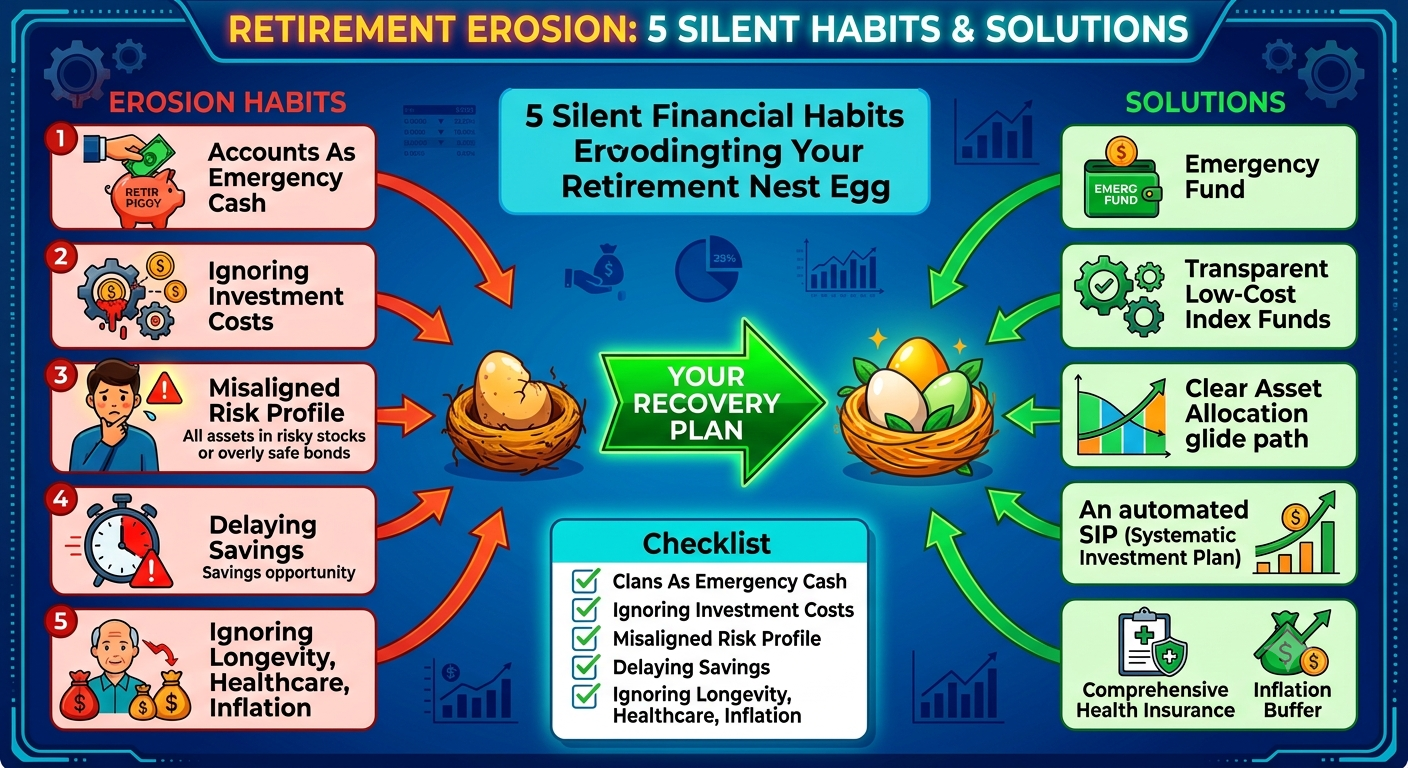
This comprehensive infographic visualizes the common financial pitfalls described in the article, showing how subtle behaviors like ignoring fees or delaying savings quietly reduce your lifetime returns.
5 Silent Financial Habits Eroding Your Retirement Nest Egg
1. Treating Retirement Accounts Like Emergency Cash
Why it erodes your corpus: Early withdrawals or borrowing against long-term funds completely breaks the momentum of compounding interest. Compounding works exponentially in the final years; pulling money out early resets your wealth clock. Furthermore, tapping retirement instruments prematurely often triggers tax liabilities, exit loads, or strict regulatory penalties.
How to fix it:
- Isolate your funds: Build a dedicated emergency fund containing 3 to 12 months of living expenses. Keep this money strictly in highly liquid assets like high-yield savings accounts or liquid mutual funds so you never have to touch your core retirement accounts.
- Examine alternatives: If you face a genuine cash crunch, prioritize low-cost, short-term borrowing options rather than liquidating appreciating assets.
- Replenish aggressively: If an emergency forces an early withdrawal, immediately automate higher monthly contributions afterward to restock your account and limit the long-term damage.
2. Ignoring Investment Costs and Fees
Why it erodes your corpus: High expense ratios, distributor commissions, and hidden advisory fees quietly eat away at your net returns. A seemingly small 1% difference in fees can wipe out up to 20% of your total potential lifetime wealth over a 30-year investing horizon. Additionally, overactive trading and portfolio churn invite heavy Securities Transaction Tax (STT) burdens, brokerage fees, and preventable short-term capital gains taxes.
How to fix it:
- Go direct and passive: Utilize low-cost index funds or Exchange-Traded Funds (ETFs) for your core market exposure. When choosing active mutual funds, actively opt for ‘Direct’ plans over ‘Regular’ plans to bypass distributor commissions.
- Embrace a buy-and-hold strategy: Minimize frequent trading. Set a clear investment thesis and allow your quality assets to compound undisturbed, keeping transaction costs and tax friction to an absolute minimum.
3. Being Overly Conservative Too Early (or Too Aggressive Too Late)
Why it erodes your corpus: Holding excess cash or relying solely on Fixed Deposits (FDs) during your early career years guarantees that inflation will erode your purchasing power. Conversely, taking on excessive equity risk right before you retire exposes you to “sequence of returns risk,” where a sudden market crash can decimate your life savings at the exact moment you need to draw from them.
How to fix it:
- Establish a clear asset allocation glide path: Maintain high equity exposure when you have decades ahead of you. Automatically and gradually shift towards safer, income-generating debt instruments as you approach your target retirement date.
- Conduct annual risk reviews: Reassess your personal risk tolerance and remaining time horizon once a year to ensure your portfolio stays balanced.
- Create a cash buffer for retirement: As retirement nears, keep 3 to 5 years’ worth of anticipated living expenses in safe instruments (like short-term debt or bonds). This buffer ensures you never have to liquidate equities during a temporary market downturn.
4. Delaying Savings and Underfunding Retirement Plans
Why it erodes your corpus: Procrastination is incredibly expensive in the financial world. Every year you delay your initial contribution drastically increases the amount of money you must save in the future to reach the exact same target. For perspective, if you want to accumulate a specific nest egg by age 60, starting at age 35 requires you to save more than double the monthly amount of someone who started at age 25.
How to fix it:
- Start immediately: Do not wait for a massive salary. Even a tiny increase in your current monthly contributions will compound into substantial wealth over a multi-decade timeline.
- Automate your discipline: Set up an automated monthly SIP or payroll deduction. When savings happen automatically on payday, you eliminate the temptation to spend those funds.
- Invest your windfalls: Direct your professional bonuses, tax refunds, and unexpected salary hikes straight into your retirement accounts instead of funding immediate lifestyle upgrades.
5. Not Planning for Longevity, Healthcare, and Inflation
Why it erodes your corpus: Thanks to modern medicine, lifespans are lengthening, meaning your retirement savings may need to sustain you for 25, 30, or even 40 years. Failing to account for this—coupled with the relentless pressure of healthcare inflation, which typically hovers around 10% to 12% annually—can completely deplete an otherwise healthy retirement fund prematurely.
How to fix it:
- Assume a long life: Run your financial projections using highly conservative longevity assumptions. Plan for a retirement that lasts at least 30 years.
- Insure against catastrophe: Maintain comprehensive health insurance and a robust critical illness policy completely independent of any employer-provided coverage. This firewall protects your core investments from sudden medical liquidations.
- Factor in a realistic inflation buffer: Always build a 4% to 6% annual inflation factor into your future expense projections so your purchasing power remains completely intact.
- Diversify your payout streams: Combine equity systematic withdrawal plans (SWPs) with steady, guaranteed income streams or part-time work to protect against market volatility during your retirement years.
6. Action Checklist: Your Portfolio Recovery Plan
To immediately halt your portfolio’s erosion, execute these six tactical steps:
Empower Your Financial Future
Just as small, negative habits can quietly erode your hard-earned wealth, small, deliberate adjustments can powerfully accelerate it. By shielding your retirement accounts from short-term temptations, eliminating unnecessary fee leaks, executing a well-timed risk glide path, and accounting for inflation, you fundamentally shift the trajectory of your financial life. Financial security is built through consistency, not luck. Take control of your habits today, give your retirement corpus the room it needs to thrive, and step confidently into a future of true independence! If your situation feels complex, consider scheduling a session with a certified financial planner to build a tailored recovery roadmap.
Related Articles:
Common emotional mistakes to avoid with your Retirement fund
Money mistakes to avoid in 50s for a prosperous life




Start the conversation
Share a helpful experience, ask a thoughtful question, or add another perspective for fellow readers.