
Introduction
Quick navigation:
What is Medical Inflation?
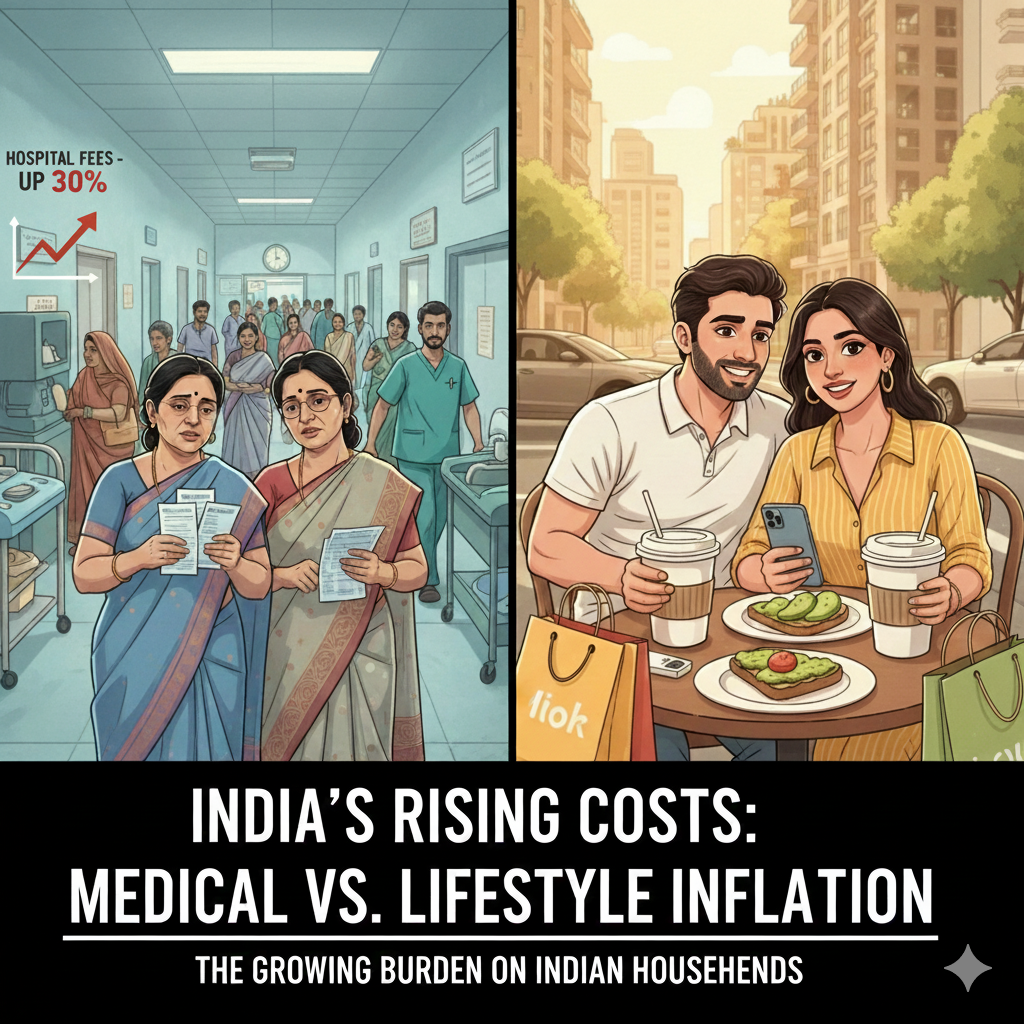
Medical inflation refers to the rate at which healthcare costs such as hospitalization, diagnostics, medicines, medical devices, and clinician fees—rise over time. In India, medical inflation has often outpaced general inflation, driven by factors such as increased use of technology, a rising burden of noncommunicable diseases (diabetes, heart disease), higher wages for specialised staff, and greater utilization of private sector services.
Key drivers in India
- Growing prevalence of chronic diseases and longer life expectancy.
- Adoption of advanced diagnostics, procedures and medical devices.
- Price of branded medicines and higher margins in private hospitals.
- Regional disparities—urban hospitals typically charge more than rural providers.
- Historically high out-of-pocket spending, though public schemes (e.g., Ayushman Bharat) and generics pushback have moderated this for some groups.
Why it matters
Because a substantial share of health spending in India occurs as (Out of pocket) OOP expenditure, even moderate yearly increases in medical prices can lead to catastrophic expenses for families without adequate insurance or savings.
What is Lifestyle Inflation?
Lifestyle inflation (also called lifestyle creep) is the increase in discretionary spending when income rises—upgrading smartphones, shifting to branded clothing, eating out more frequently, switching to premium conveyance or larger homes. It often occurs gradually and can be hard to notice because higher spending feels like improved living standards.
Key drivers in India
- Rapid urbanisation and higher disposable incomes in cities.
- Easy access to credit (EMIs, credit cards) and app-based consumption models (food delivery, grocery delivery, streaming packs).
- Social pressure and visible consumption (social media influence).
- Availability of aspirational, affordable premium products and services.
Why it matters
Lifestyle inflation reduces saving and investing rates. Over time, it limits the household’s ability to build emergency funds, invest for retirement, or pay for large unexpected expenses like major medical bills.
Direct Comparison: Medical vs Lifestyle Inflation
While both raise household expenses, they differ in predictability, controllability, and consequences:
- Predictability: Lifestyle inflation is often a planned or semi-planned response to higher income. Medical inflation is less predictable because health shocks are stochastic and costs can spike suddenly.
- Control: You can control lifestyle inflation by budgeting and deliberate choices. Medical inflation is partly controllable through prevention, insurance and informed provider choices, but not fully.
- Financial risk: Lifestyle upgrades typically have limited downside (except lost savings). Major medical events can cause catastrophic financial loss without insurance or savings.
In short: unchecked lifestyle inflation slowly erodes future resilience, while medical inflation can cause acute financial crises.
Impact on Indian Households
The combined effect of lifestyle spending and rising medical costs often shows up as:
- Lower emergency savings and higher vulnerability to health shocks.
- Increased reliance on debt (credit cards, loans) to fund healthcare or lifestyle choices.
- Postponed investment goals (retirement, child’s education) as current consumption rises.
- Greater demand for health insurance products, but gaps remain in coverage adequacy and claims understanding.
Note: Government initiatives (national health schemes, generic drug stores) and employer benefits have reduced some risks, but these do not eliminate the need for household-level preparedness.
How to Manage Both: Practical Strategies
1. Treat healthcare as a separate line item
Keep a dedicated health budget and emergency health corpus. That prevents medical spending from being absorbed by routine discretionary expenses.
2. Use adequate health insurance (and review regularly)
- Prefer comprehensive family floater or individual covers that match likely hospitalisation costs in your city.
- Consider top-up/critical illness covers for expensive treatments. Check exclusions, waiting periods and sub-limits.
- Review sum insured periodically—medical inflation means a cover bought a few years ago may no longer be adequate.
3. Build a health emergency fund
Aim for a health buffer separate from general emergency savings. For example, keep 3–6 months of household expenses as a rainy-day fund and an additional targeted health corpus sized to local treatment costs.
4. Control lifestyle inflation consciously
- Automate savings: increase investment SIPs as income grows before increasing discretionary spend.
- Follow a budgeting rule: allocate a fixed percent to pleasures, savings, and essentials—adjust as income rises but keep savings proportionate.
5. Invest to outpace inflation
Unlike bank fixed deposits, long-term market-linked investments (equity mutual funds, direct equities) historically have beaten general inflation and—over long horizons—could help counter medical cost rises. Risk tolerance and time horizon should guide asset allocation.
6. Preventive healthcare and cost-conscious choices
- Regular health check-ups, timely screenings and lifestyle interventions can reduce incidence and severity of chronic disease.
- Opt for generic medicines where appropriate, use government schemes and price-regulated options, and compare hospital packages.
- Use telemedicine and primary care to avoid unnecessary expensive specialist visits and diagnostics.
7. Use tax and public schemes
Claim available tax benefits on health insurance premiums (Section 80D) and use government health schemes or state-level programs where eligible. Employers’ group health covers can fill gaps but should be supplemented by personal cover if needed.
8. Plan with scenario calculations (example)
Suppose a current hospitalisation costs ₹1,00,000. Assume medical inflation of 8% a year. In 10 years the same treatment could cost approximately ₹1,00,000 × (1.08^10) ≈ ₹2.16 lakh. Such simple projections help decide how much cover and corpus you need.
Conclusion & Key Takeaways
- Medical inflation and lifestyle inflation both threaten household financial health, but in different ways: one is sudden and potentially catastrophic, the other erosive and gradual.
- Prioritise prevention, adequate and regularly reviewed insurance, and a dedicated health fund to protect against medical inflation.
- Manage lifestyle inflation by automating savings and treating increased income as an opportunity to secure long-term goals rather than just to upgrade consumption.
- Combine policy tools (tax benefits, government schemes), cost-conscious behaviour (generic drugs, teleconsultation) and long-term investments to build resilience.
For a tailored financial or medical advice, consult a certified financial planner and medical professionals, this article is informational and not a substitute for personal advice.
Also Read: Fitness goals for you in your 50s
Health & fitness as part of Retirement Planning




Start the conversation
Share a helpful experience, ask a thoughtful question, or add another perspective for fellow readers.