
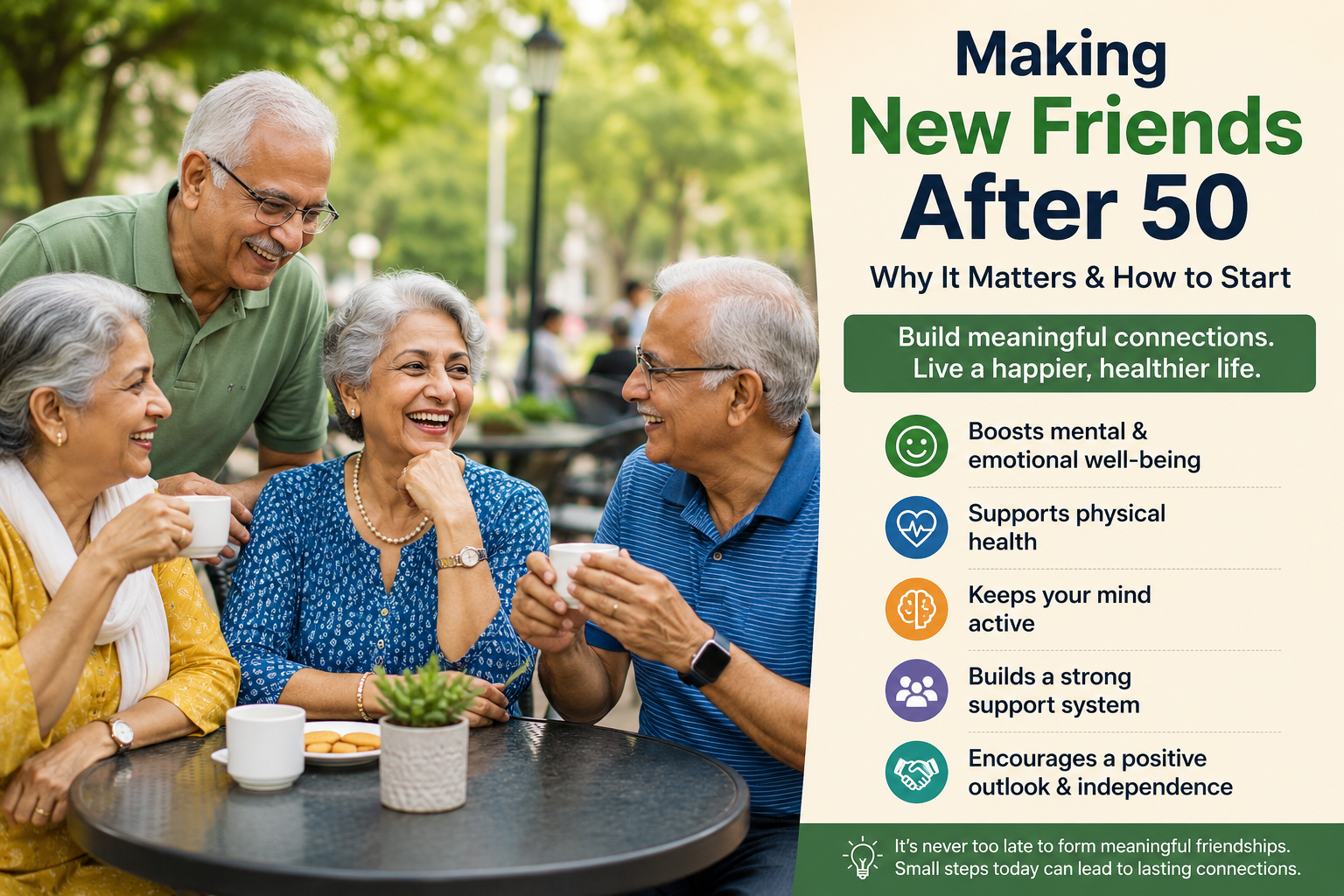
Strong friendships after 50 can reduce loneliness, improve well-being and make retirement more active, meaningful and fulfilling.
Growing older does not mean your social life has to become smaller. In fact, your 50s, 60s and beyond can be a wonderful time to make new friends, discover interests and build relationships that are not connected to your career or your children’s lives.
For many Indians, however, making new friends after 50 can feel surprisingly difficult. Work may have provided a ready-made social circle for decades. Children may move to another city or abroad. Friends may relocate, become busy with grandchildren, or simply have different priorities. Retirement can make the change even more noticeable.
The good news is that friendship can be built at any age. You do not need to become extremely social or attend events every week. Sometimes one new conversation, one regular activity or one old acquaintance contacted again can be the beginning of a meaningful connection.
In this article:
- Why making new friends matters after 50
- 7 benefits of new friendships
- Why friendship becomes especially important after retirement
- Where can you meet new people?
- 9 practical ways to make new friends
- Can online friendships become real friendships?
- What if making friends feels difficult?
- A simple 30-day friendship challenge
- Frequently Asked Questions
Why Making New Friends Matters After 50
Friendship becomes particularly valuable when the structure of everyday life changes. Retirement, the loss of a spouse, children moving away, relocation, health changes and reduced workplace interaction can all alter the way we connect with other people.
The World Health Organization (WHO) identifies social isolation and loneliness as important influences on health and well-being. Its work on social connection also highlights that major life changes such as retirement, bereavement and moving can affect our social connections.
That does not mean everyone who lives alone is lonely, or that having many acquaintances automatically protects someone from loneliness. The quality of relationships matters. One or two people with whom you can genuinely talk may be more valuable than a large contact list.
7 Benefits of Making New Friends in Your 50s and Beyond
Making new friends in your 50s (and beyond!) comes with many valuable benefits. Here’s why it’s especially important during this stage of life:
1. Boosts Mental and Emotional Well-being
New friendships provide emotional support, reduce feelings of loneliness, and can help protect against social isolation. Having people to talk to and share experiences with is crucial for happiness and a sense of belonging.
A friend does not necessarily need to solve your problems. Sometimes being able to say, “I had a difficult day,” or share something funny that happened can make everyday life feel less solitary.
2. Increases Physical Health
Research shows that strong social connections can positively impact physical health and well-being. Friends often encourage each other to stay active and make healthier choices, whether that means going for a walk, eating better, attending a doctor’s appointment or simply getting out of the house.
It is important not to think of friendship as a substitute for medical care. Rather, good social connections can be one part of a healthier lifestyle.
3. Stimulates the Mind
Engaging in conversation and shared activities with new friends sharpens memory and keeps the brain active. Learning from others’ perspectives and experiences helps keep your mind fresh and curious.
A new friend may introduce you to a subject you know little about—photography, history, technology, gardening, music, investing, travel or even a new language. That exchange of ideas can keep life intellectually interesting.
4. Offers New Experiences
Meeting new people can introduce you to hobbies, interests, and activities you might not have tried otherwise. It keeps life exciting and dynamic!
Perhaps you have always wanted to attend a play, learn pottery, join a walking group, explore local heritage sites or travel with a small group. A new friendship can provide the little push needed to try something different.
Travel can be especially rewarding when it becomes a social experience rather than simply a destination. If travel is something you would like to explore after retirement, see Grey Smiles’ Travel Options for Indian Seniors: Off the Beaten Track for ideas beyond the usual senior travel itinerary.
5. Builds a Support System
As we age, having a reliable network of friends becomes even more important. Friends can assist with small tasks, offer advice, and provide comfort during tough times—making life’s challenges easier to navigate.
This can be particularly valuable for people whose children live in another city or abroad. Friends cannot replace family, but they can provide something different: people who are physically closer to your everyday life.
That could mean a friend who can accompany you to a doctor’s appointment, a neighbour who can check on you when you are unwell, someone who can help you get to the hospital in an emergency, or simply a person you can call when you need company.
6. Encourages Positive Outlook
Spending time with friendly, positive people can elevate your mood and inspire optimism. A good laugh or a meaningful conversation can make a world of difference!
Friendship also creates small things to look forward to—a Saturday morning walk, a monthly lunch, a book discussion or simply a phone call on a quiet evening.
7. Promotes Independence
A strong social circle can help you maintain independence longer by offering both practical support and encouragement to stay active in the community.
Independence does not mean doing everything alone. In later life, knowing that there are people you can call—and people who can call you—can actually make independent living feel safer and more comfortable.
This becomes particularly important when health emergencies arise. Having a friend, neighbour or trusted contact who can help with a hospital visit, transportation, paperwork or simply being present during a stressful situation can make a difficult day much easier.
For the financial and practical side of such situations, see Grey Smiles’ Managing Medical Emergencies & Hospitalization Cashflows.
Why Friendships Become Even More Important After Retirement
Retirement changes more than your income. It changes your daily routine, identity and opportunities to interact with people.
For decades, your workplace may have provided colleagues, conversations, lunch breaks, celebrations and informal friendships. Once you retire, those interactions can disappear almost overnight.
This is why retirement planning should include more than financial planning. Grey Smiles’ 6 Stages of Retirement Planning looks at retirement as a journey across different stages of life—not simply the day you stop receiving a salary.
You should also think about:
- Who will you speak to regularly?
- Who will you meet during the week?
- Who will you call when you want to go out?
- What activities will bring you into contact with people?
- Who will be part of your life if your children live elsewhere?
It also changes the way you think about health and financial preparedness. As we age, healthcare can become a larger part of the household budget, making it important to think about both financial resilience and the people who can support you practically.
Grey Smiles’ guide to Medical Inflation vs Lifestyle Inflation explains why healthcare costs deserve a separate place in retirement planning.
For people whose children live abroad, this becomes even more relevant. India’s traditional retirement model often assumed that adult children would remain geographically close and provide support as parents aged. That assumption is becoming less reliable as children move between Indian cities and countries for education and careers.
Grey Smiles explores this changing family safety net in The Wealth Gap: Why Indian Retirement Planning Falls Behind the West.
This makes a local social network increasingly important. It could be the neighbour who knows where your medical records are, the friend who can accompany you to a doctor’s appointment, the walking partner who notices when you have not turned up, or simply someone you can call when you need company.
Where Can You Meet New People After 50?
You do not necessarily need to join a formal “senior citizens” group. Look for places where people naturally meet repeatedly. Friendship is often easier to build when you see the same people several times rather than attending one-off events.
- Walking or fitness groups
- Book clubs and reading groups
- Gardening groups
- Art, music or cooking classes
- Yoga or other exercise classes
- Community and resident welfare activities
- Volunteering and NGO activities
- Local cultural programmes
- Libraries and talks
- Travel groups
- Alumni groups
- Professional networks
- Religious or spiritual communities
- Hobby and interest groups
For local events, plays, workshops and other activities, you can explore District’s events listings or BookMyShow’s events section. Always check the event details, location, accessibility and timings before attending.
9 Practical Ways to Make New Friends
Making new friends in your later years of life helps you stay happier, healthier, and more engaged with life. It’s never too late to form meaningful connections. Here are some practical tips to help you connect with new people at this stage in life.
1. Join Groups or Clubs
Look for local clubs or groups that match your interests such as book clubs, gardening groups, art classes, or walking groups. Community centers often offer a variety of activities designed for older adults.
Tip: Don’t choose an activity simply because it is advertised for seniors. Choose something you genuinely enjoy. Shared interests make conversations easier.
2. Take Classes
Consider enrolling in education classes or workshops. Whether it’s cooking, painting, or using new technology, learning together is a great way to bond with others.
You could also consider learning something you never had time for while working—photography, a musical instrument, a language, digital skills or even something as simple as cooking a cuisine you have never tried.
3. Volunteer
Volunteering is a fantastic way to meet like-minded people while giving back. Hospitals, museums, community kitchens, animal shelters, NGOs and other community initiatives often need help.
Volunteering can be particularly meaningful after retirement because it gives you a reason to show up regularly and a sense that your time and experience are still useful.
4. Attend Faith or Spiritual Gatherings
If you’re spiritually inclined, consider joining activities at your place of worship. Many temples, mosques, churches, gurdwaras and other organisations host social events, community activities and support groups.
5. Reconnect with Old Acquaintances
Reach out to former classmates, coworkers, or neighbors. Many people appreciate a friendly message and may be open to rekindling the connection.
You don’t need to begin with “We should meet soon.” Try something simple: “I was thinking about our old days and wondered how you are doing.”
Sometimes the easiest new friendship is an old friendship that simply needs restarting.
6. Attend Community Events
Look for local festivals, library talks, Dramas & Plays, Sufi nights, music performances, lectures, workshops and cultural events. These events are excellent places to strike up casual conversations.
You will find details of such events in your city on District or BookMyShow.
7. Be Open and Approachable
Smile, make eye contact, and initiate small talk. A friendly attitude helps others feel comfortable approaching you!
Try asking simple questions: “Have you been coming here regularly?” “How did you get interested in this?” or “Have you attended this event before?”
You don’t have to be naturally outgoing. A small conversation is enough. Friendship often begins with ordinary, almost forgettable interactions.
8. Join Exercise Groups
Whether it’s yoga, tai chi, or aerobics, exercise classes offer physical and social benefits.
Walking groups can be particularly useful because conversation develops naturally while you are doing something together.
9. Stay Persistent
Building new friendships can take time, so be patient and keep putting yourself out there.
The first person you meet may remain an acquaintance. The second may become someone you occasionally meet. Over time, one of these relationships may develop into a genuine friendship.
Can Online Friendships Become Real Friendships?
Absolutely. Technology can be particularly useful when mobility, distance or health makes frequent face-to-face meetings difficult.
WhatsApp groups, video calls, online classes, hobby communities and social platforms can help people stay connected. They can also help you discover people with similar interests before meeting them in person.
For parents whose children live abroad, technology may already be a major part of family life. But there is a difference between talking to your children on WhatsApp and having someone nearby who can meet you for tea, accompany you on a walk or help you when something unexpected happens.
Online connection works best when it complements—not completely replaces—real-world interaction. Where possible, turn an online interest into an offline activity: meet for coffee, attend an event, join a class or organise a small group outing.
What If Making New Friends Feels Difficult?
It is easy to assume that everyone else already has their social circle sorted. Often, they don’t.
Some people may be hesitant because they have recently retired, moved cities, lost a spouse, gone through a divorce, experienced a health change or simply become less confident about meeting people.
You don’t have to transform yourself into a highly social person. Start small.
- Call one person you haven’t spoken to for a while.
- Attend one local event.
- Join one activity that meets regularly.
- Invite someone for tea or coffee.
- Take a walk with someone rather than walking alone.
- Volunteer for an hour or two each week.
If loneliness is persistent, overwhelming or affecting your daily life, it is also reasonable to discuss it with a doctor or qualified mental health professional. Loneliness is not a personal failure, and asking for help is not a sign of weakness.
Try the 30-Day Friendship Challenge
If “make new friends” sounds too big, make the goal smaller: create more opportunities for connection over the next 30 days.
Week 1: Contact two old acquaintances.
Week 2: Attend one group activity, class or event.
Week 3: Invite one person for tea, coffee, a walk or lunch.
Week 4: Choose one activity you can attend regularly.
The goal isn’t to come away with four new best friends. The goal is to create more opportunities for friendship to happen.
Friendship Does Not Have to Mean a Big Social Life
Not everyone wants a busy calendar after 50. And you don’t need one.
A fulfilling social life could mean two close friends, a weekly walking group, occasional lunches with former colleagues, regular family calls and one hobby that brings you into contact with people.
The point is not to stay constantly busy. It is to have people, places and activities that connect you to life outside your own four walls.
Remember: It Is Never Too Late
Remember, People of all ages value genuine friendship. Taking even small steps can lead to meaningful new connections. Good luck—you’ve got this!
Friendship after 50 may look different from friendship at 25 or 35. You may have less time for superficial relationships and more appreciation for people with whom you can be yourself.
That can be a wonderful thing.
You don’t need hundreds of contacts. You need people you can laugh with, learn from, call when you need help, meet without an agenda and share life’s ordinary moments with.
Frequently Asked Questions
Is it difficult to make new friends after 50?
It can feel more difficult because work, children and familiar routines may no longer create opportunities to meet people. But joining regular activities, volunteering, taking classes and reconnecting with old acquaintances can make it easier.
How can I make friends after retirement?
Start with activities that happen regularly, such as walking groups, hobby clubs, classes, volunteering, community events or alumni groups. Repeated contact makes it easier for casual acquaintances to become friendships.
How do I make friends if my children live abroad?
Build connections around your own local life rather than relying only on family calls. Consider neighbourhood activities, hobby groups, volunteering, exercise classes, cultural events and regular meet-ups with friends.
Having children abroad does not mean you have to build your entire social life around waiting for their next visit. A strong local network can make everyday life more connected while allowing your children to remain an important part of your life from a distance.
Can making new friends help with loneliness after retirement?
New friendships can help increase social connection and reduce isolation. However, persistent or severe loneliness may need more support than simply meeting new people. Speaking to a qualified professional can be appropriate when loneliness is affecting daily life.
Is it too late to make new friends in your 60s or 70s?
No. Friendship can develop at any age. The key is to create opportunities to meet people regularly and to be willing to take small social risks, such as starting a conversation or inviting someone for coffee.
What are good activities for seniors to meet new people?
Walking groups, yoga, book clubs, gardening, music, art, cooking, volunteering, community events, travel groups, cultural programmes and classes are all possible starting points. Choose activities you genuinely enjoy.
Can online friendships help older adults stay connected?
Yes. Video calls, WhatsApp groups, online classes and interest-based communities can help people maintain and develop connections, especially when distance or mobility makes face-to-face interaction difficult.
Do I need lots of friends to have a fulfilling retirement?
No. A meaningful social life does not require a large circle. A few trusted friends, regular activities and people you can contact when you need company or practical help can be enough.
What if I have lost friends or my spouse and feel uncomfortable starting again?
Start slowly. You do not have to replace an old relationship or immediately create a close friendship. Begin by being around people, joining a regular activity or reconnecting with someone you already know. New relationships can develop gradually.
Related Grey Smiles Reads
- 6 Stages of Retirement Planning — Retirement is a journey, not simply a last working day.
- The Wealth Gap: Why Indian Retirement Planning Falls Behind the West — How changing family structures are affecting retirement security in India.
- Managing Medical Emergencies & Hospitalization Cashflows — Preparing for the practical realities of health emergencies.
- Medical Inflation vs Lifestyle Inflation — Why healthcare deserves a separate place in retirement planning.
- How to Calculate Your Retirement Corpus in India — Understanding the financial side of retirement readiness.
- Travel Options for Indian Seniors: Off the Beaten Track — Ideas for staying curious and active after retirement.
Useful External Resources
For more information about social connection and healthy ageing, see the World Health Organization’s resources on social isolation and loneliness among older people.
For local events, plays, workshops and activities, explore District and BookMyShow.
Health note: Social connection is one part of healthy ageing. It does not replace medical treatment, exercise, nutrition or professional mental health support when needed.




Start the conversation
Share a helpful experience, ask a thoughtful question, or add another perspective for fellow readers.