
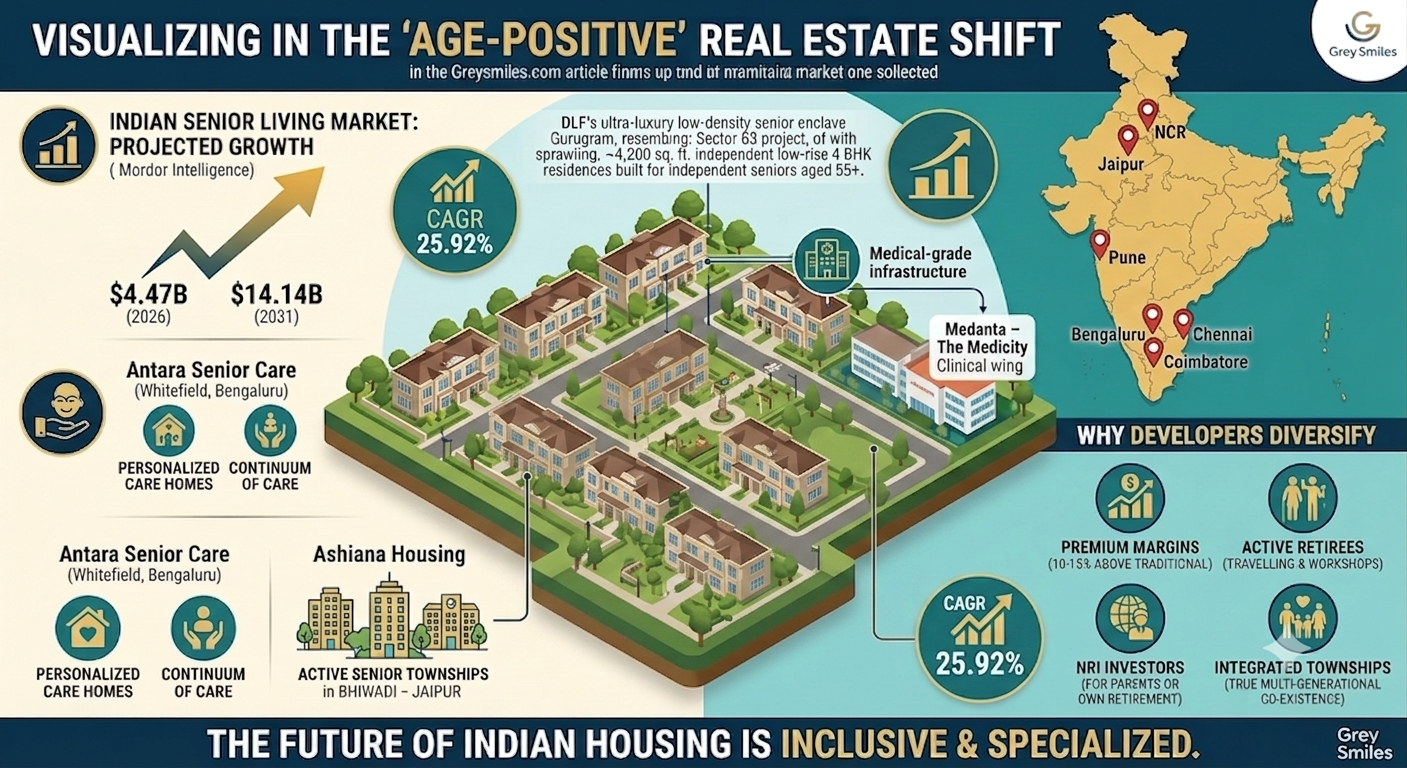
A visualization of the projected growth and developer landscape in India’s expanding $14.14 billion senior living market.
Optimizing your retirement plan is essential for long-term independence. Choosing the right housing is a core component of this plan. As the local real estate landscape transforms, understanding the rise of Age-Positive Senior Living in India helps you safeguard your lifestyle. For a deeper perspective, we recommend our internal guide: What to Look for in a Senior Living Community. This article explores how developers view the older demographic. They are now moving beyond nursing models to create sophisticated, integrated ecosystems.
The Shift: Real Estate Giants Enter the Market
The historical stigma surrounding elder housing is fading fast. Consequently, the market is responding with unprecedented velocity. According to market data from Mordor Intelligence, this residential segment is expanding at a CAGR of over 25%.
Previously, developers treated retirement housing as a fringe, niche category. They often placed these units on the distant outskirts of cities. However, large real estate conglomerates are now disrupting that outdated setup. These corporations are elevating Age-Positive Senior Living in India into a premium, strategic asset class. This shift goes beyond bricks and mortar. Instead, developers are engineering self-sustaining ecosystems that combat social isolation and provide reliable care frameworks.
The DLF Milestone: Setting a New Luxury Benchmark
The entry of **DLF Limited** into the luxury senior residential space in Gurugram serves as a clear signal of this market evolution.
- The Project: DLF is introducing a dedicated ultra-luxury enclave in Sector 63 on the Golf Course Extension Road. This space specifically serves independent seniors aged 55 and above.
- The Scale: The project spans a low-density footprint with spacious 4 BHK units. It commands an estimated sales potential of ₹2,000 crore. This scale confirms that senior residences are no longer experimental, small-scale ventures.
- The Value Proposition: DLF avoids institutional imagery. Instead, they position these units as independent luxury residences. They layer high-end hospitality over clinical-grade infrastructure. Furthermore, they form strategic partnerships with entities like Medanta – The Medicity to integrate emergency medical wings directly into the architecture.
When a titan like DLF deploys capital here, they validate premium retirement communities. Consequently, seniors can now maintain an elite standard of living without compromising on emergency medical preparedness.
📌 Strategic Internal Resources for Indian Retirees
Before you commit your capital to real estate, you should review our breakdown on What are Mutual Funds for Retirement?. This will help you optimize your liquid assets. Additionally, ensure your estate allocation remains sound. You can do this by recognizing the common emotional mistakes to avoid with your retirement fund.
Who Else is Leading the Charge?
Major developers across India are aggressively diversifying their portfolios. They recognize that India’s active aging cohort is financially empowered and seeking localized lifestyle upgrades.
| Developer / Brand | Operational Strategy | Geographic Focus |
|---|---|---|
| Ashiana Housing | Focuses on large townships with clubhouses and activities. | Pan-India |
| Antara Senior Care | Offers a continuum of care, including memory and assisted living. | Delhi NCR, Bengaluru |
| Columbia Pacific Communities | Emphasizes hospitality, culinary management, and concierge services. | Bengaluru, Kochi |
| Primus Lifespaces | Provides “soft infrastructure” and smart, voice-enabled homes. | Multi-city |
| Casagrand | Integrates specialized enclaves within modern, mixed-use communities. | South India |
Why Developers are Diversifying
- Premium Margins: These projects bundle services like 24/7 nursing and smart monitoring. Consequently, these assets frequently command a 10% to 15% price premium.
- The “Active” Retiree: Modern Indian retirees are not withdrawing from society. They consult, invest, mentor, and travel. Therefore, they demand living spaces that act as springboards for their busy schedules.
- The NRI Factor: Non-Resident Indians represent a formidable demand engine. They invest heavily to secure a trustworthy environment for their aging parents. Alternatively, they book units for their own future return to India.
- Township Integration: Forward-thinking planners no longer isolate seniors on the periphery. Instead, they integrate dedicated senior wings into expansive city townships. This keeps older family members connected to broader urban networks.
Conclusion: The Future of Age-Positive Senior Living in India
The institutional entry of giants like DLF and Max Antara changes the narrative entirely. Consequently, the future of premier housing in India is inclusive and age-specialized.
Historical stigma is disappearing. In its place, luxury specialization is growing. This transition proves that the demand for Age-Positive Senior Living in India is not an administrative fallback. Instead, it is an expertly architected choice. It preserves independent living, active health, and structural connection throughout your retirement journey.




Start the conversation
Share a helpful experience, ask a thoughtful question, or add another perspective for fellow readers.