
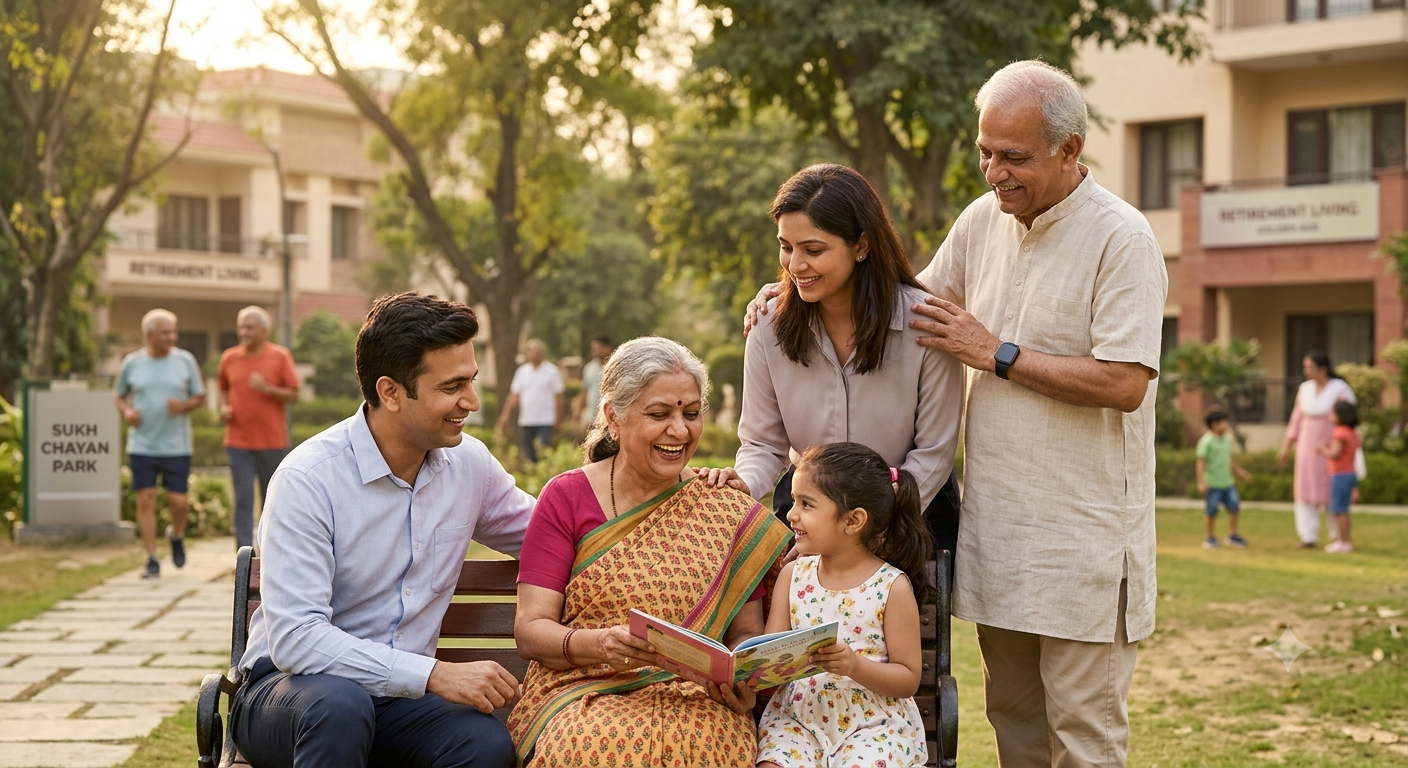
For decades, Indian retirement meant co-living in a single ancestral home or remaining isolated in one’s native town while children moved away for careers. Today, an active paradigm is taking over: the Independent Proximity retirement model.
Building on our core framework in the 6 Stages of Retirement Planning, the Independent Proximity retirement model allows active seniors over 60 to relocate near their adult children while keeping an independent home, personal routines, and legal autonomy.
1. De-escalating the Distance Dilemma for Adult Children
When adult children move to major commercial hubs or overseas, long-distance caregiving creates immense emotional stress. Managing sudden medical emergencies across time zones forces children to abandon professional commitments and rush home in panic.
By adopting the Independent Proximity retirement model, parents proactively remove long-distance anxiety for their children while ensuring immediate support during crises. To align your location choices with your financial runway, review our strategic guides on Retirement Planning Strategies.
2. Understanding the Independent Proximity Retirement Model
The core philosophy of the Independent Proximity retirement model is simple: Live close enough to meet for dinner in 15 minutes, but far enough to maintain separate front doors.
Co-living under one roof often leads to unintended friction over daily habits, meal preferences, and domestic management. Maintaining a separate residence ensures seniors preserve their authority, lifestyle rhythm, and social identity. Global research by organizations like the World Health Organization on Age-Friendly Environments confirms that independent housing directly boosts mental health and longevity in older adults.
3. Real-World Relocation Examples: Domestic & International
Domestic Case: Moving to Quieter Hubs (The Goa & Coonoor Shift)
Consider Ramesh and Sunita (ages 64 and 62), who owned a family home in Delhi. When their daughter settled in Mumbai, they sold their Delhi property and purchased a quiet 2BHK apartment in South Goa—just a 45-minute flight from Mumbai. They spend winters hosting their grandchildren in Goa and fly to Mumbai for monthly weekend stays, maintaining an active, pollution-free lifestyle without encroaching on their daughter’s daily routines.
International Case: The Expat Parent Strategy (US & Singapore Moves)
When Vikram and Meenakshi’s son moved to San Jose, California, they chose not to move into his suburban house. Instead, they rented a modest 1-bedroom apartment 10 minutes away. Vikram joined a local community garden, while Meenakshi volunteered at the local library. They enjoy Sunday dinners with their son’s family, but retreat to their own apartment for quiet mornings and personal downtime.
4. The Four Pillars of the Independent Proximity Retirement Model
- The 15-Minute Radius Rule: Secure housing within 10 to 20 minutes of your children to enable spontaneous visits without blurred domestic boundaries.
- Intentional Family Engagements: Focus on quality over quantity. Plan weekend lunches, outings, or scheduled grand-parenting sessions rather than open-ended daily drop-ins.
- Boundary-Led Caregiving: Support your children willingly, but avoid turning your retirement years into full-time, uncompensated domestic or nanny labor.
- Autonomous Healthcare Infrastructure: Register directly with neighborhood doctors, diagnostic labs, and emergency clinics near your own home.
5. Financial & Cross-Border Logistics
Whether moving between Indian states or relocating abroad, financial clarity is essential. Manage cross-border capital flows under official Reserve Bank of India (RBI) FEMA guidelines to keep your nest egg secure. Explore our resource library on Pension Plans & Income Drawdowns to structure stable cash flows during relocation.
| Logistical Parameter | Domestic Relocation (Within India) | International Relocation (Overseas) |
|---|---|---|
| Housing Strategy | Long-term rental or compact 2BHK purchase near city centers. | Long-term apartment lease or ADU (Accessory Dwelling Unit). |
| Medical Protection | Comprehensive Indian health policy + high-deductible Super Top-Up. | Expat health insurance, travel medical riders, or private local plans. |
| Banking & Liquidity | Local bank accounts integrated with auto-sweep FDs and liquid SIPs. | NRE/NRO account maintenance + international wire transfer access. |
6. Active Aging: Building an Independent Social Eco-System
Relocating should expand your personal horizon, not shrink it. Active aging relies on creating an independent ecosystem of friends, hobbies, and wellness activities. Join local senior citizen clubs, walking groups, or civic organizations in your new town. Read more about cultivating healthy family bonds and emotional well-being in our Relationships & Family Section.
7. Conclusion: Embracing Relocation as an Act of Generational Love
At its heart, choosing to relocate near your adult children—when feasible and welcomed by them—is one of the most practical and loving gifts you can offer as a parent. When adult children are building demanding careers and raising families of their own, facing distant parental health crises forces them into untenable trade-offs between their professional commitments, nuclear families, and filial duties. Expecting them to repeatedly uproot their lives in emergencies creates immense emotional and operational strain.
By taking the proactive step to move closer, you relieve your children of long-distance anxiety and eliminate crisis logistics. More importantly, when paired with the Independent Proximity retirement model, this move doesn’t mean compromising your freedom or becoming a dependent. Living in your own home nearby guarantees that you preserve your dignity, daily autonomy, and self-respect—allowing both generations to thrive independently while enjoying the warmth of being close together.




Start the conversation
Share a helpful experience, ask a thoughtful question, or add another perspective for fellow readers.