
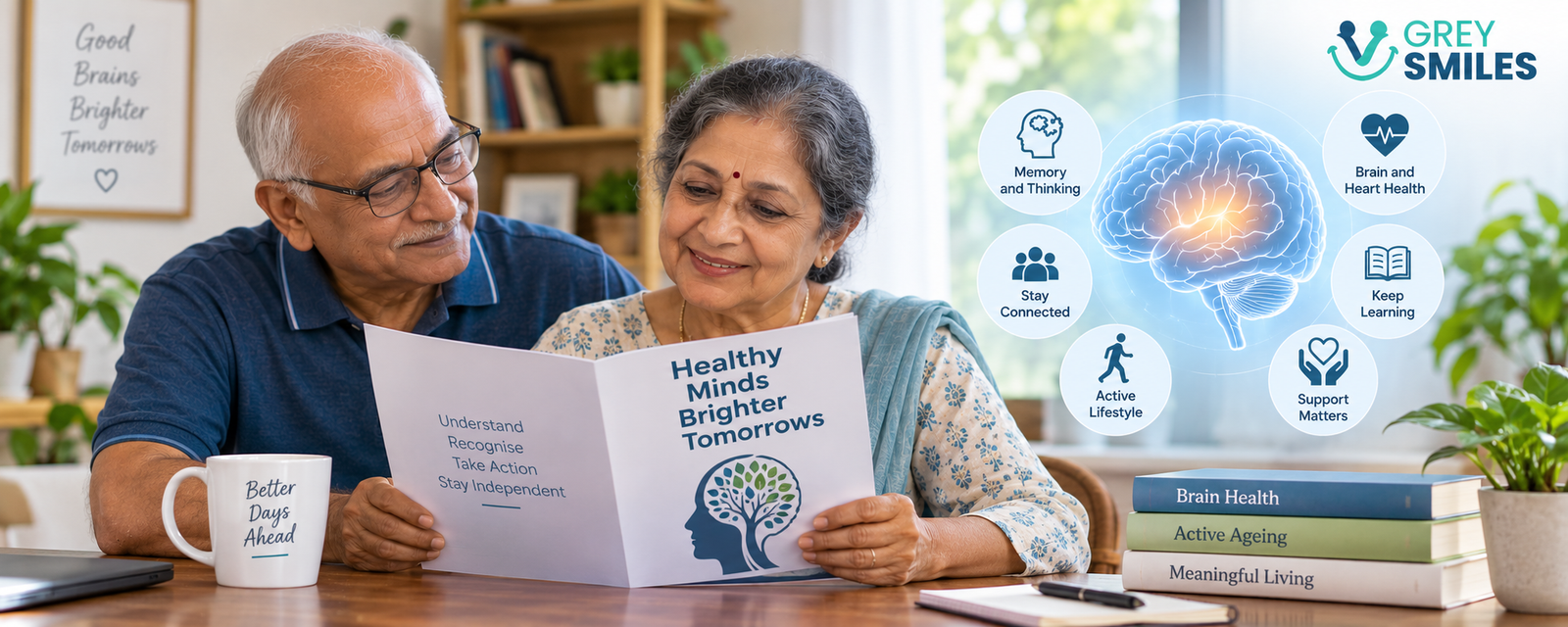
Understanding memory changes and supporting healthy brain ageing can help older adults and families plan ahead.
By Dr. Anirban Kundu _ By Dr. Anirban Kundu is Associate Director, Department of Cardiovascular and Thoracic Surgery (CTVS), CK Birla Hospital, Delhi. Cardiovascular and Thoracic Surgeon with over 24 years of experience in cardiac surgery.
Ageing is accompanied by many physical and psychological changes. Taking a little longer to remember a name, occasionally forgetting where something was kept or needing more time to recall an event can be a normal part of ageing.
But there is an important difference between occasional forgetfulness and a persistent change in memory, thinking or the ability to manage everyday activities. When these changes become significant, progressively worsen or begin to interfere with daily life, they deserve attention.
Such changes may be associated with dementia, an umbrella term for conditions that affect cognitive function and can interfere with everyday life.
At a Glance
- Dementia is an umbrella term for a decline in cognitive abilities that interferes with everyday functioning.
- Alzheimer’s disease is the most common form of dementia.
- Some forgetfulness can be a normal part of ageing, while persistent or progressive changes that affect everyday life warrant attention.
- Age and genetics are important risk factors that cannot be changed, but several health and lifestyle factors can be addressed.
- There is no guaranteed way to prevent Alzheimer’s disease, but healthy habits and good management of cardiovascular and other health conditions may support brain health.
What Is Dementia?
Dementia is not a specific disease. It is an umbrella term used to describe a decline in cognitive abilities that is significant enough to interfere with everyday functioning.
It can affect memory, reasoning, judgement, language, attention and the ability to perform familiar activities. Dementia usually develops gradually, although the pattern and rate of change vary depending on the underlying cause.
Common symptoms can include:
- Frequent or worsening memory loss
- Difficulty finding words or following conversations
- Problems with planning and decision-making
- Confusion about time or place
- Changes in behaviour or personality
- Difficulty carrying out familiar everyday tasks
- Increasing dependence on others
There are several types and causes of dementia. Alzheimer’s disease is the most common form, but dementia can also be associated with conditions such as vascular disease, Lewy body disease and frontotemporal disorders.
For a broader medical explanation of dementia, including its different types and symptoms, readers can refer to the National Institute on Aging’s guide to dementia.
Alzheimer’s Disease: The Most Common Form of Dementia
Alzheimer’s disease is a progressive brain disorder that gradually affects memory, thinking and, over time, the ability to manage everyday activities. It is the most common form of dementia.
In Alzheimer’s disease, changes in the brain include abnormal accumulations of proteins such as amyloid plaques and tau tangles. These changes affect nerve cells and the connections between them, although the causes of Alzheimer’s in an individual person are usually complex and involve a combination of age, genetics and other factors.
In the early stages, a person may show persistent forgetfulness, repeat questions, forget recent conversations or appointments, or experience subtle changes in behaviour or mood.
As the disease progresses, a person may experience increasing confusion, difficulty communicating, problems recognising familiar people or places and greater difficulty managing everyday activities. In advanced stages, substantial memory loss and dependence on caregivers may occur.
Remember: Not every memory problem in an older adult is Alzheimer’s disease. Several medical, psychological and neurological conditions can affect memory and thinking. Persistent or progressive changes should therefore be discussed with a healthcare professional rather than assumed to be dementia.
Distinguishing Normal Ageing from Dementia
Occasional forgetfulness is common as we grow older. Someone may take longer to remember a name, occasionally misplace something or need a reminder, and then remember the information later.
The more concerning pattern is when cognitive changes become persistent, progressively worsen or begin to interfere with everyday life.
| Normal ageing | Changes that may warrant evaluation |
|---|---|
| Occasionally forgetting a name but remembering it later | Frequently forgetting names or information and not recalling them later |
| Occasionally needing a reminder | Repeatedly asking the same question despite having received the answer |
| Taking longer to recall information | Frequently forgetting recent conversations or important events |
| Occasionally misplacing things | Frequently losing things and being unable to retrace one’s steps |
| Needing occasional help with reminders | Increasing difficulty managing familiar everyday responsibilities |
| Momentarily becoming unsure of the day | Becoming repeatedly confused about time or place |
| Occasionally making an error with a familiar task | Becoming unable to complete familiar tasks without assistance |
One symptom by itself does not establish a diagnosis. The pattern of change, whether it is getting worse and how it affects everyday functioning are all important.
What Can Increase the Risk?
Some risk factors for dementia cannot be changed. These include increasing age, family history and certain genetic factors.
Other factors may be modifiable and include:
- High blood pressure
- Diabetes
- Obesity
- Smoking
- Excessive alcohol intake
- Physical inactivity
- Poor sleep
- Social isolation
- Depression
- Hearing impairment
These factors do not mean that a person will develop dementia. They are part of a much larger picture, and the relationship between health, ageing and cognitive decline is complex.
This is one reason why looking after both brain health and cardiovascular health becomes important as we age. Managing conditions such as hypertension and diabetes, staying physically active and avoiding smoking are useful for overall health as well as potentially supporting healthier brain ageing.
Can Alzheimer’s Be Prevented?
There is currently no guaranteed way to prevent Alzheimer’s disease. However, healthy ageing habits and good management of conditions that affect cardiovascular and overall health may help support brain health and may reduce the risk of cognitive decline.
The focus should therefore be on sustainable habits rather than searching for a single food, supplement, exercise or “brain game” that promises to prevent dementia.
Keep Your Mind Active
Continue learning, reading, thinking and engaging with activities that require attention and problem-solving. Learning something new, pursuing a hobby, reading regularly or taking part in activities that require concentration can all keep the mind engaged.
The objective is not to find one particular activity that prevents dementia. It is to keep learning, thinking and participating in mentally stimulating activities throughout life.
Challenge Your Memory and Concentration
Games such as cards or chess, puzzles and crosswords can provide opportunities to concentrate, remember information and solve problems. They can be enjoyable ways to keep the mind engaged, although they should be seen as part of an active lifestyle rather than as a guaranteed way to prevent dementia.
Don’t Let Technology Do All the Remembering
Our phones can remember telephone numbers, addresses, appointments, shopping lists and much more for us. That convenience is useful, but there is also value in occasionally exercising our own memory.
For example, you might try remembering a short list, a telephone number or a set of tasks before checking your device. These small habits are not a treatment or prevention strategy, but they can be a simple way of keeping memory engaged in everyday life.
Make Physical Activity Part of Your Routine
Regular physical activity supports cardiovascular health and is associated with better brain health. Walking, swimming, cycling or other forms of exercise appropriate to your age and physical condition can help you remain active and support overall wellbeing.
The right amount and type of exercise will vary from person to person, particularly where medical conditions or mobility limitations are present. If you have a health condition or have been inactive for some time, speak with your healthcare professional about what is appropriate for you.
Stay Socially Connected
Time spent with friends, family and the wider community provides companionship, conversation and mental stimulation. As we grow older, maintaining meaningful social connections is an important part of overall wellbeing.
Digital communication can help maintain relationships, especially when family members live far away, but it should complement rather than completely replace face-to-face interaction where that is possible.
Sleep and Chronic Conditions Matter Too
Good sleep and proper management of chronic health conditions are important parts of healthy ageing. Conditions such as hypertension and diabetes should not simply be accepted as unavoidable parts of getting older; they need appropriate medical care and regular monitoring.
Likewise, persistent sleep problems, depression, hearing difficulties or other changes that affect everyday functioning deserve attention rather than being dismissed as “just ageing.”
GreySmiles Take
Dementia and Alzheimer’s disease are not inevitable consequences of ageing. Many older adults maintain good cognitive function well into later life.
The aim should not be to fear every lapse in memory. It is to recognise when a change becomes persistent, progressive or begins to interfere with everyday life, and to seek medical advice when that happens.
Healthy ageing is also about the habits we build long before retirement. Staying physically active, managing conditions such as hypertension and diabetes, getting adequate sleep, remaining mentally engaged and maintaining meaningful social connections can all contribute to better overall health as we grow older.
These habits should not begin only after retirement. The foundations for healthy ageing are built much earlier, often in our 40s and 50s.
The goal is not simply to add years to life, but to add life to those years.
Health information: This article is intended for general educational purposes and does not replace a medical consultation, diagnosis or treatment. Persistent or progressive changes in memory, thinking or everyday functioning should be discussed with a qualified healthcare professional.
About the Author
Dr. Anirban Kundu is a Cardiovascular and Thoracic Surgeon with over 24 years of experience in cardiac surgery. He is currently Associate Director, Department of Cardiovascular and Thoracic Surgery (CTVS), CK Birla Hospital, Delhi, and has extensive expertise in complex cardiac, thoracic and vascular conditions.
His areas of clinical interest include coronary artery bypass grafting (CABG), particularly high-risk and complex cases, heart valve surgery, thoracic surgery and vascular surgery. Dr. Kundu completed his MBBS and MS (General Surgery) from the University of Delhi, followed by an MCh in Cardiovascular and Thoracic Surgery from Sanjay Gandhi Postgraduate Institute of Medical Sciences (SGPGIMS), Lucknow. Alongside his clinical practice, he remains actively involved in teaching, mentorship and continuing academic and professional development.




Start the conversation
Share a helpful experience, ask a thoughtful question, or add another perspective for fellow readers.