
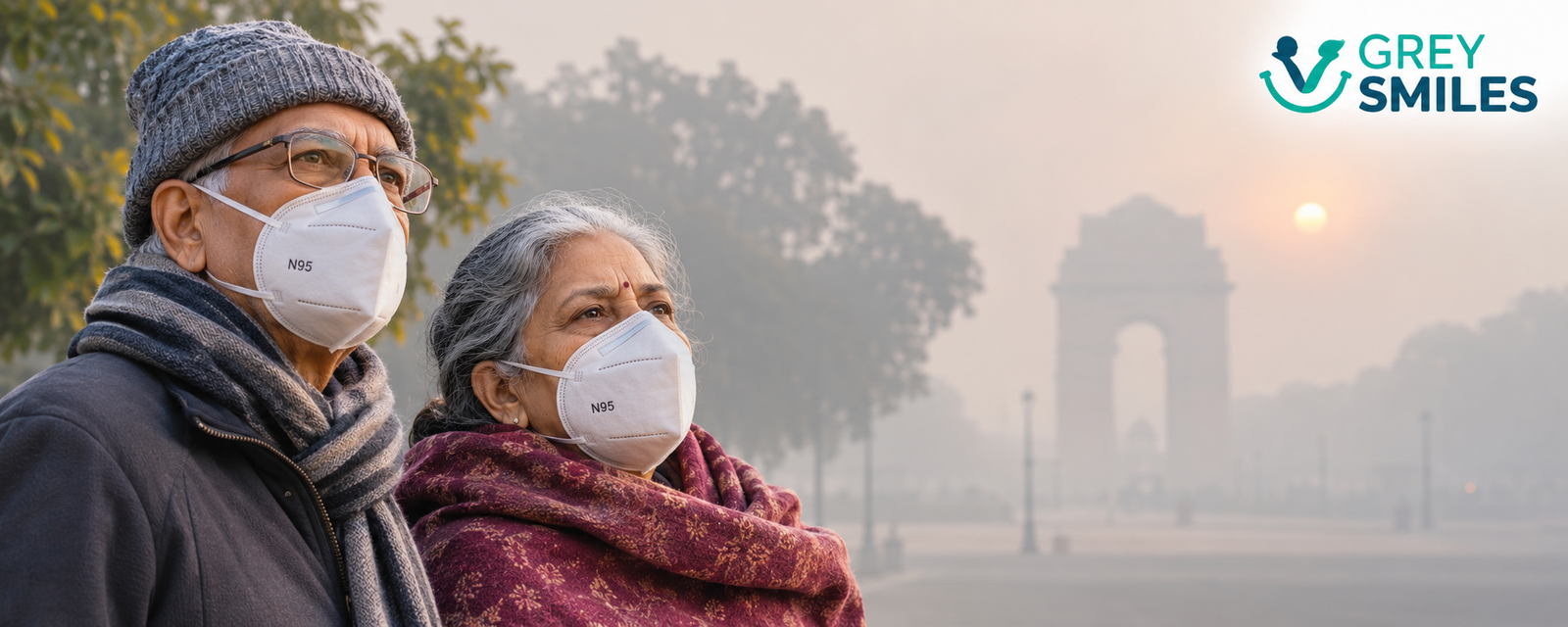
Winter pollution and poor air quality can pose additional health risks for older adults.
By Dr. Anirban Kundu: Associate Director, Department of Cardiovascular and Thoracic Surgery (CTVS), CK Birla Hospital, Delhi. Cardiovascular and Thoracic Surgeon with over 24 years of experience in cardiac surgery.
There was a time when winter in Delhi was eagerly awaited. The long, lazy afternoons in the soft winter sunshine, the familiar taste of dry fruits and seasonal delicacies, and the pleasure of spending time outdoors made Dilli ki sardi something to look forward to.
That experience has changed considerably. Over the last decade, winter in Delhi and several other North Indian cities has increasingly become associated with smog, poor air quality, burning eyes, sore throats and breathing discomfort. The bright winter sun is often replaced by a hazy sky, while outdoor activities become difficult, particularly for people with existing health conditions.
For older adults, this is more than an inconvenience. Winter temperatures combined with high levels of air pollution can create a double health burden. Cold weather can place additional strain on the heart and circulation, while polluted air can aggravate respiratory and cardiovascular conditions. Older people, particularly those living with chronic illnesses, are more vulnerable to these combined effects.
At a Glance
- Older adults are more vulnerable to air pollution because lung function, immune response and the body’s ability to cope with physiological stress can change with age.
- PM2.5 and other pollutants can aggravate respiratory and cardiovascular conditions.
- Cold temperatures can increase blood pressure and place additional strain on the heart.
- Long-term exposure to air pollution is also associated with adverse effects on brain health and overall wellbeing.
- Checking AQI, reducing exposure during severe pollution episodes and maintaining appropriate indoor air quality can help reduce risk.
- Physical activity remains important, but its timing, location and intensity should be adapted to air quality conditions.
Why Are Older Adults More Vulnerable to Winter Pollution?
Ageing brings several physiological changes that can make the body less resilient to environmental stress. When cold weather and polluted air occur together, these changes can become particularly important.
1. Reduced Lung Function
As people grow older, lung elasticity and respiratory muscle strength may decline. The ability to clear inhaled particles and mucus through coughing can also become less effective.
This can make older adults more susceptible to the effects of particulate pollution. Fine particles, particularly PM2.5, can penetrate deep into the respiratory system and trigger inflammation. Their effects are not limited to the lungs; they can also contribute to systemic inflammation and cardiovascular stress.
2. Existing Health Conditions
Many older adults live with one or more chronic conditions, including diabetes, hypertension, chronic obstructive pulmonary disease (COPD), asthma and heart disease.
Exposure to polluted air can aggravate these conditions. Someone whose breathing is already compromised may experience increased respiratory discomfort, while a person with existing cardiovascular disease may face additional strain.
3. Cold Weather Places Additional Strain on the Heart
When exposed to cold temperatures, blood vessels constrict to help the body conserve heat. This normal physiological response can raise blood pressure and increase the resistance against which the heart has to pump blood.
For older adults with hypertension or existing heart disease, this additional strain can be significant. When combined with the inflammatory effects of air pollution, the overall cardiovascular burden may increase.
4. Changes in Immune Function
The immune system also changes with age. Older adults may be less able to respond effectively to certain infections, making them more vulnerable to respiratory illnesses such as influenza and pneumonia.
Polluted air can irritate and inflame the respiratory tract, potentially worsening existing respiratory problems and making it harder to recover from infections. The risk is particularly concerning for people who also have diabetes, COPD or cardiovascular disease.
What Health Risks Does Winter Pollution Create for Seniors?
The combination of cold weather and poor air quality can affect several systems in the body. The risks are not identical for everyone, but four areas deserve particular attention.
1. Respiratory Diseases
Fine particulate matter (PM2.5), coarse particulate matter (PM10), nitrogen dioxide and other pollutants can irritate the airways and aggravate existing lung conditions.
Older adults with asthma, COPD or chronic bronchitis may experience increased coughing, wheezing, breathlessness and worsening symptoms. Exposure to polluted air is also associated with a higher risk of respiratory infections and adverse respiratory outcomes.
For someone with an underlying condition, even a relatively short period of worsening symptoms can affect mobility, sleep and everyday independence. Severe episodes may require medical attention or hospitalisation.
2. Cardiovascular Diseases
Air pollution is not merely a lung problem. Fine particulate matter and gaseous pollutants can affect the cardiovascular system through inflammation, oxidative stress and changes in blood vessel function.
Exposure to PM2.5 has been associated with increased risks of cardiovascular events, including heart attacks and strokes. Cold weather can add to this burden by increasing blood pressure and placing additional demands on the heart.
Older adults with hypertension, coronary artery disease, previous heart attacks or other cardiovascular conditions should therefore take particular care during periods of severe pollution and cold weather.
3. Brain Health and Cognitive Function
The effects of air pollution may extend beyond the respiratory and cardiovascular systems. Research has increasingly associated long-term exposure to particulate matter and other air pollutants with cognitive decline and an increased risk of dementia.
Air pollution may contribute to inflammation and other biological changes that affect the brain. However, dementia is a complex condition with several contributing factors, and air pollution should not be viewed as a direct or inevitable cause in an individual.
For a better understanding of age-related memory changes and dementia, read our article on Alzheimer’s and Dementia: What Changes with Age?
4. Increased Risk of Severe Illness and Premature Death
Long-term exposure to air pollution is associated with a substantial burden of disease and premature mortality. Older adults and people with pre-existing respiratory or cardiovascular conditions are among the groups at greater risk.
The scale of the problem in India is significant. The Global Burden of Disease Study 2019, published in The Lancet Planetary Health, estimated that approximately 1.67 million deaths in India in 2019 were attributable to air pollution. These estimates include the effects of ambient and household air pollution, not just winter smog in northern India.
This is a reminder that air pollution is not simply a seasonal inconvenience. It is a major public health challenge with long-term consequences.
How Can Older Adults Protect Themselves During Poor AQI Days?
Individual precautions cannot solve the problem of air pollution. Reducing emissions at source must remain the priority. However, until air quality improves, older adults and their families can take practical steps to reduce exposure.
1. Check the AQI Before Planning Outdoor Activities
Do not rely only on how the air looks or feels. Pollution levels can vary considerably across locations and times of the day.
Check the Air Quality Index (AQI) before planning walks, errands or outdoor exercise. India’s National AQI categorises air quality from Good to Severe, with progressively greater health concerns as pollution levels rise.
The Central Pollution Control Board (CPCB) provides air quality information through its National Air Quality Index portal.
Older adults with lung or heart disease should be particularly cautious when AQI levels are Poor, Very Poor or Severe. Follow local health advisories and reduce prolonged or strenuous outdoor exertion when pollution levels are high.
2. Adjust Outdoor Activities
Walking and other forms of physical activity are important for healthy ageing. However, exercising outdoors during periods of severe pollution can increase the amount of polluted air inhaled.
On days with poor AQI:
- Move exercise indoors wherever practical.
- Avoid strenuous outdoor activity during high-pollution periods.
- Choose a cleaner indoor environment for walking, stretching or light exercise.
- Resume outdoor activity when air quality improves, following medical advice where necessary.
Do not assume that early morning is always the safest time to exercise. Pollution levels vary with weather, location and local sources. Check the AQI before deciding when to go out.
3. Use a Properly Fitting N95 Mask When Necessary
If an older adult must go outdoors during a high-pollution episode, a well-fitting N95 or equivalent particulate respirator may help reduce exposure to fine particles.
The fit matters. The mask should cover both the nose and mouth, with minimal gaps around the face. Cloth masks, scarves and ordinary loose-fitting masks do not provide equivalent protection against fine particulate pollution.
It is important to remember that N95 masks filter particles; they do not protect against every gaseous pollutant. People with breathing difficulties should consult their doctor about whether wearing a respirator is appropriate for them.
4. Improve Indoor Air Quality
Staying indoors does not automatically guarantee protection. Outdoor pollution can enter homes, while indoor sources such as tobacco smoke, incense, cooking fumes and solid-fuel heating can add to exposure.
During periods of poor outdoor air quality, families can consider the following measures:
- Use a correctly sized air purifier with a HEPA filter in the room where the older person spends most of their time.
- Keep windows and doors closed when outdoor pollution is high, while ensuring that indoor air does not become contaminated by cooking or other sources.
- Avoid smoking indoors and minimise incense, mosquito coils and other sources of smoke.
- Use cleaner cooking fuels and ensure that kitchens have appropriate ventilation.
- Maintain air purifiers according to the manufacturer’s instructions and replace filters when required.
Air purifiers can reduce indoor particulate matter, but they are not a substitute for cleaner outdoor air. Their effectiveness also depends on room size, filter quality, maintenance and other indoor pollution sources.
5. Continue Managing Existing Health Conditions
Older adults with hypertension, diabetes, COPD, asthma or heart disease should continue their prescribed treatment and follow up with their doctors.
Families and caregivers should ensure that:
- Regular medicines are available and taken as prescribed.
- Inhalers and other prescribed respiratory treatments are used correctly.
- Blood pressure and blood glucose are monitored where advised by the treating doctor.
- Medical appointments are not postponed simply because outdoor conditions are poor; alternative arrangements such as teleconsultations may be considered where appropriate.
- New or worsening symptoms are discussed promptly with a healthcare professional.
Do not independently change medication or increase inhaler use without medical advice.
6. Pay Attention to Warning Signs
Families and caregivers should be alert to symptoms that may indicate a worsening respiratory or cardiovascular condition.
These include:
- New or worsening breathlessness.
- Persistent coughing or wheezing.
- Chest discomfort or pain.
- Unusual fatigue or a sudden decline in activity tolerance.
- Confusion or sudden changes in alertness.
- Fever or symptoms suggestive of a respiratory infection.
Chest pain, severe breathlessness, fainting, sudden confusion or signs of a stroke require urgent medical attention. Do not assume that these symptoms are simply due to pollution or cold weather.
Physical Activity: Should Seniors Stop Exercising During Winter Pollution?
Physical activity is essential for healthy ageing. It supports cardiovascular fitness, muscle strength, balance, mobility and mental wellbeing. Older adults should not abandon exercise simply because winter pollution is a recurring problem.
However, the environment in which physical activity takes place matters. Exercising in heavily polluted air can increase exposure to harmful particles, potentially reducing some of the health benefits of activity.
A more sensible approach is to adapt rather than stop:
- Choose indoor walking, gentle yoga, stretching or suitable strength and balance exercises during poor AQI days.
- Use a well-ventilated indoor space with cleaner air.
- Reduce intensity and duration if feeling unwell or if advised by a doctor.
- Resume outdoor activity when conditions improve.
- People with chronic heart or lung conditions should seek individual advice about safe exercise levels.
The objective is to preserve the benefits of physical activity while avoiding unnecessary exposure to severe pollution.
What Can Families, Caregivers and Senior-Living Facilities Do?
Protecting older adults during winter pollution episodes should not be left entirely to the individual. Families, caregivers and organised senior-living facilities can play an important role.
For Families and Home Caregivers
- Check the local AQI before planning outdoor visits, walks or appointments.
- Keep prescribed medicines, inhalers and emergency contact details accessible.
- Ensure that older family members understand when to avoid outdoor exertion.
- Arrange indoor activities so that reduced outdoor movement does not lead to prolonged inactivity or isolation.
- Coordinate with the treating doctor if symptoms worsen or the person has significant underlying health conditions.
For Senior-Living Communities and Care Facilities
Senior-living communities, assisted-living facilities and residential care homes should have a basic air-quality response plan, particularly in regions that experience recurring winter pollution.
Useful measures include:
- Monitoring local AQI and communicating alerts to residents and staff.
- Identifying residents with respiratory and cardiovascular conditions who may need additional precautions.
- Providing cleaner indoor spaces for walking and other activities.
- Maintaining air filtration equipment and ensuring that it is suitable for the space.
- Training staff to recognise warning signs and respond to medical emergencies.
- Reviewing outdoor events and exercise schedules when pollution levels deteriorate.
Why Individual Precautions Are Not Enough: The Need for Public Action
Air purifiers, masks and reduced outdoor activity can help limit exposure, but they cannot solve the underlying problem. Nor should the responsibility for breathing clean air fall entirely on older people and their families.
Air pollution requires sustained action from governments, regulators, industries, urban planners and citizens.
1. Reduce Emissions at Source
Vehicle emissions, industrial pollution, construction dust, waste burning and other sources need effective regulation and enforcement. Cleaner public transport, better traffic management, cleaner industrial processes and improved waste management are essential parts of the solution.
2. Improve Urban Planning
Cities need better public transport, green spaces, pedestrian-friendly neighbourhoods and effective dust control. Residential areas, hospitals and senior-living facilities should be planned with attention to traffic exposure and environmental quality.
3. Strengthen Air Quality Monitoring and Public Communication
Air quality information should be accessible, reliable and easy to understand. Local alerts should be accompanied by practical health guidance, especially for older adults and people with existing medical conditions.
4. Make Healthcare Facilities Better Prepared
Hospitals, primary healthcare centres and community health workers should be equipped to recognise and respond to pollution-related health problems. Seasonal awareness campaigns can help families understand the risks before winter pollution reaches its peak.
5. Hold Institutions Accountable
Citizens, resident welfare associations, senior-citizen groups and community organisations can demand transparent pollution monitoring, effective enforcement and measurable improvements in air quality.
Clean air is not a lifestyle privilege. It is a basic public health requirement.
The GreySmiles Take
Winter should be a season that older adults can enjoy, not one they must endure indoors because the air outside has become unsafe.
Ageing can make the body more vulnerable to cold temperatures and air pollution, particularly when chronic respiratory or cardiovascular conditions are present. Families and caregivers can reduce some of the risks through better awareness, AQI monitoring, appropriate indoor precautions and timely medical attention.
But these are protective measures, not a substitute for clean air. The lasting solution lies in reducing pollution at its source and making public authorities accountable for the quality of the air people breathe.
Healthy ageing requires more than good healthcare. It also requires a healthy environment.
Frequently Asked Questions
Why are older adults more affected by air pollution?
Age-related changes in lung function and immune response, together with the higher prevalence of chronic conditions such as COPD, diabetes and heart disease, can make older adults more vulnerable to polluted air.
Is PM2.5 more dangerous than PM10?
PM2.5 consists of finer particles that can penetrate deeper into the lungs. Both PM2.5 and PM10 can affect health, but fine particulate matter is particularly concerning because of its ability to reach the deeper respiratory system and its association with cardiovascular and other health effects.
Should senior citizens avoid morning walks during winter?
Not automatically. Pollution levels vary by location and time. Older adults should check the AQI before exercising and avoid prolonged or strenuous outdoor activity when air quality is poor. Indoor exercise is a useful alternative during severe pollution episodes.
Does an air purifier protect older people from outdoor pollution?
A properly sized and maintained HEPA air purifier can reduce particulate matter indoors. However, it does not eliminate all pollutants and cannot replace broader measures to reduce outdoor emissions.
Can wearing an N95 mask protect seniors from pollution?
A well-fitting N95 respirator can reduce exposure to fine particulate matter. It does not filter all gaseous pollutants, and people with significant breathing difficulties should consult their doctor before using one.
Can air pollution affect memory and brain health?
Research has associated long-term exposure to air pollution with cognitive decline and an increased risk of dementia. However, dementia has multiple contributing factors, and air pollution is not a direct or inevitable cause in every individual.
Sources & Further Reading
- World Health Organization – Air Pollution: Personal Interventions and Risk Communication
- World Health Organization – Exposure to Health-Damaging Air Pollutants
- National Centre for Disease Control – Health Consequences of Air Pollution and AQI Guidance
- Central Pollution Control Board – National Air Quality Index
- The Lancet Planetary Health – Health and Economic Impact of Air Pollution in the States of India: Global Burden of Disease Study 2019
Disclaimer: This article is intended for general health awareness and educational purposes. It is not a substitute for individual medical advice, diagnosis or treatment. Older adults with existing respiratory or cardiovascular conditions should consult their treating doctor about appropriate precautions during periods of poor air quality.




Start the conversation
Share a helpful experience, ask a thoughtful question, or add another perspective for fellow readers.