
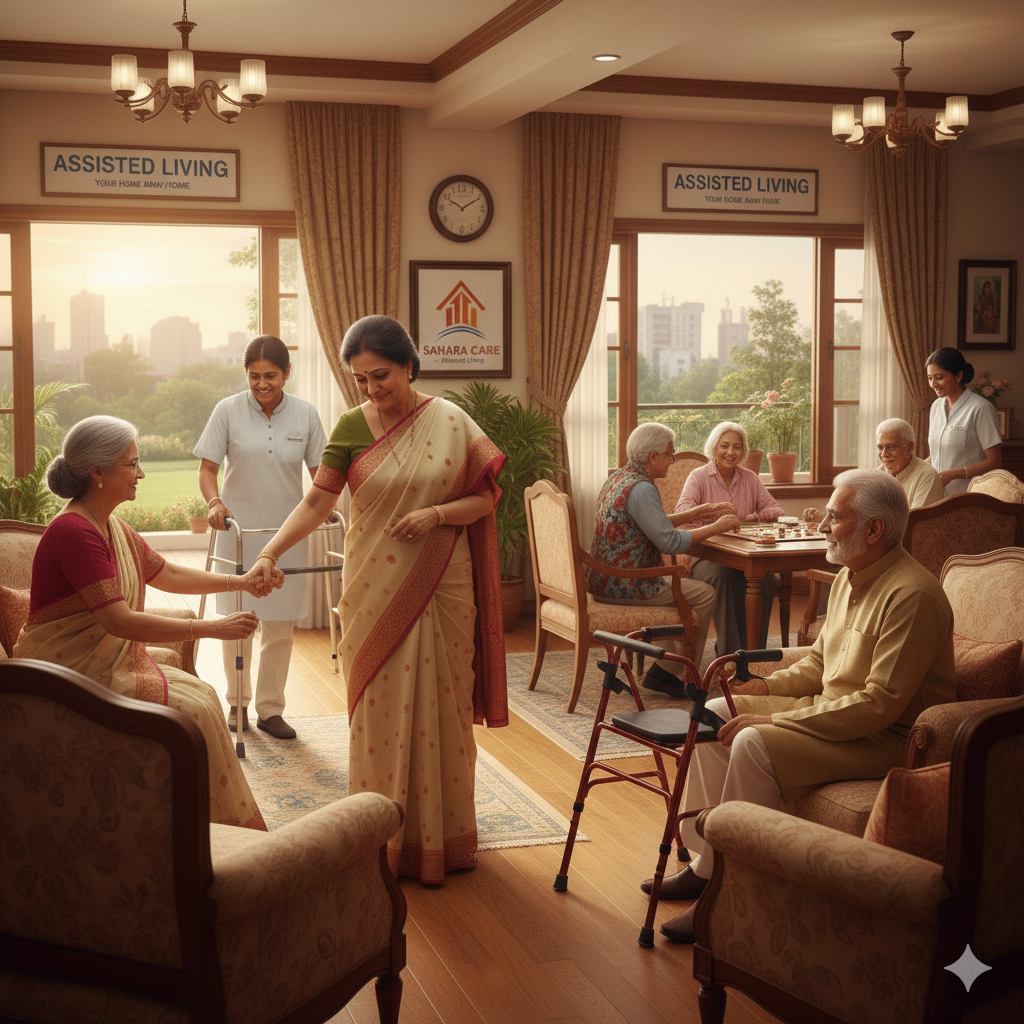
A compassionate approach: Discussing the transition to assisted living with aging parents in a comfortable Indian home setting.
Navigating elder care choices is one of the most significant life transitions urban Indian families face today. As career mobility, urbanization, and nuclear living redefine modern household structures, ensuring that aging parents receive comprehensive daily support, continuous medical access, and a lively community becomes a priority. Exploring senior living or specialized care homes is no longer about compromise; it is an active choice toward enhanced quality of life, emotional security, and professional healthcare. Below, we break down the benefits, emotional nuances, and practical considerations involved in choosing assisted living facilities across India.
The Changing Landscape of Elder Care in India
Traditionally, the responsibility of caring for aging parents has fallen squarely on the shoulders of their children, rooted in the strong family-centric values of Indian society. However, as lifestyles become more fast-paced and nuclear families become the norm, this dynamic is undergoing a gradual shift. Factors such as geographical distance, conflicting work demands, and the desire for a more enriching social life for our elders have led many to consider alternative care options, including assisted living facilities.
Advantages of Assisted Living
Ensuring Safety and Well-being
Assisted living communities offer round-the-clock supervision, medical support, and prompt emergency response, providing a greater sense of security for your parents and peace of mind for you. The daily assistance with tasks like bathing, dressing, and medication management can significantly improve their quality of life and reduce the burden on family caregivers.
Relieving Family Caregivers
Caring for aging parents can take an immense physical and emotional toll on family members. Assisted living facilities allow you to step back into the role of a loving child, rather than a full-time caregiver, helping to prevent caregiver burnout and preserving the cherished bond between you and your parents.
Conclusion
As you navigate this journey, remember that the well-being and dignity of your parents should be the guiding principle. With empathy, patience, and a willingness to explore all options, you can find a solution that honors their wishes, provides the necessary support, and gives you the peace of mind to cherish your relationship in the years to come.
Frequently Asked Questions (FAQs)
Q1. What is the difference between an old age home and modern senior living/assisted living in India?
Traditional old age homes were primarily charitable institutions for destitute elders. Modern senior living and assisted living communities are premium, purpose-built housing projects that offer active independent living alongside medical support, 24/7 security, housekeeping, recreational activities, and tailored nursing care.
Q2. How much does assisted living cost in urban India?
Costs vary based on location, amenities, and level of medical care required. Rent or monthly care fees typically range from ₹35,000 to over ₹1,200,000 per month for specialized memory or round-the-clock assisted care. Purchasing units in senior living developments involves property market rates alongside monthly maintenance fees.
Q3. What medical support facilities are available in senior housing communities?
Most reputable assisted living operators provide 24/7 nursing stations, emergency response systems in rooms, tie-ups with nearby multi-specialty hospitals, on-call doctors, and specialized care plans for conditions like Dementia, Alzheimer’s, or Parkinson’s.
Q4. How do I help my parents overcome the emotional hesitation of moving to assisted living?
Involve your parents early in the decision-making process. Take them on short day visits, let them interact with active residents, explore trial stay options, and emphasize how community living offers social activity and medical safety without losing independence.




Start the conversation
Share a helpful experience, ask a thoughtful question, or add another perspective for fellow readers.