
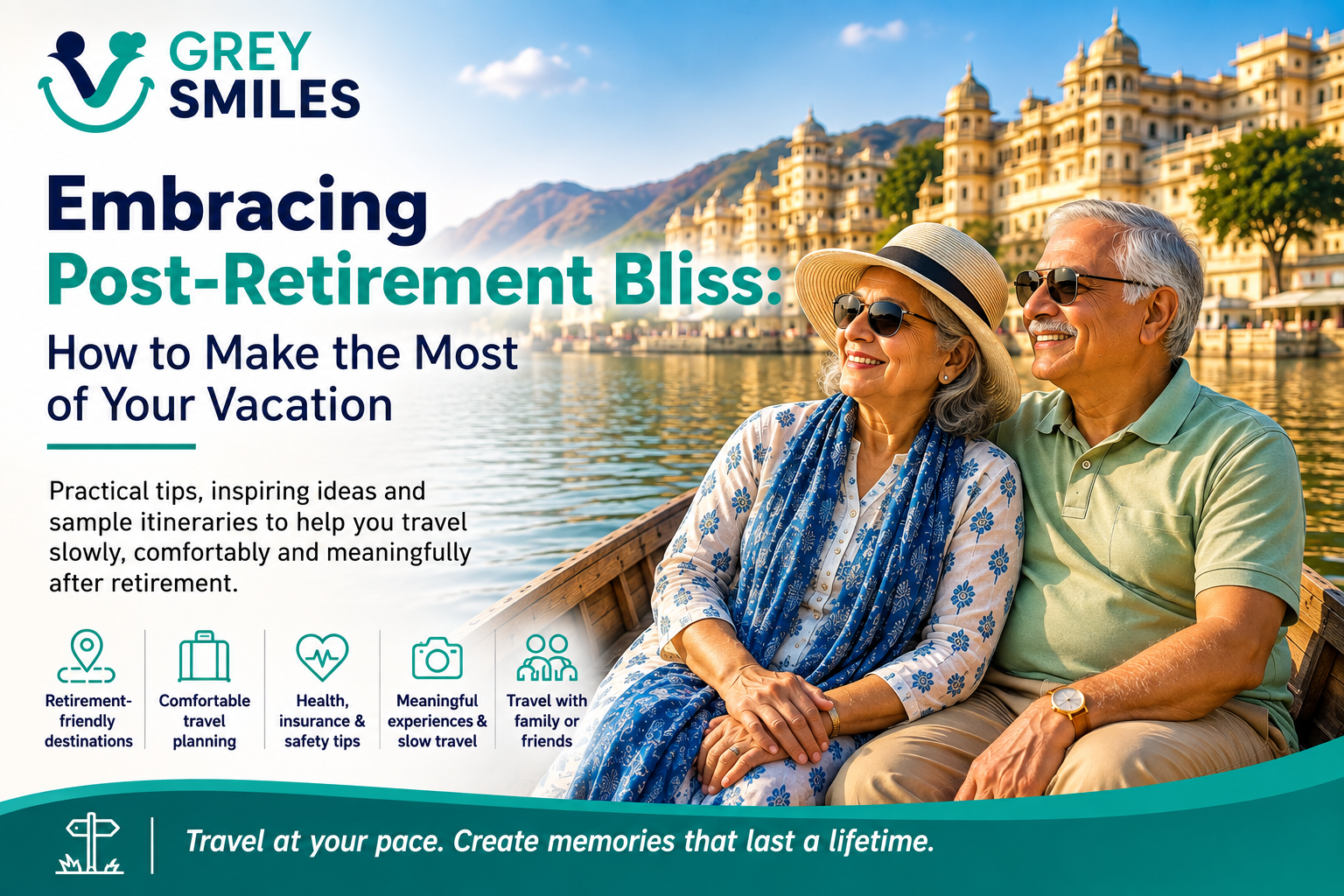
Retirement offers the freedom to travel more slowly, comfortably and on your own terms.
For years, holidays may have meant fitting everything into a few precious days. Flights at odd hours, packed itineraries, hotel check-ins, sightseeing schedules and the familiar feeling that you had to make every minute count before work called you back.
Retirement can change that. You may finally have the freedom to travel without trying to squeeze a holiday into a long weekend or a two-week annual leave window. More importantly, you can begin to travel in a way that suits your life rather than your work calendar.
That does not necessarily mean travelling more. It may mean travelling differently.
A Different Kind of Holiday After Retirement
- You can stay longer instead of trying to see everything in a few days.
- You can choose comfort and convenience without feeling that you are wasting money or time.
- You can travel around your energy levels rather than around an office calendar.
- You can revisit places you loved earlier in life or finally explore somewhere you always postponed.
- You can leave gaps in the itinerary simply because you want a slower day.
Retirement Gives You Something Money Cannot Buy: Time
One of the biggest advantages of retirement travel is not necessarily a larger travel budget. It is time.
When you are working, a destination may be judged by how much you can fit into a limited number of days. After retirement, you can spend four or five days in one place without feeling that you should already be moving on. You can take a train instead of a flight, stay in a quieter neighbourhood, return to a favourite café or simply spend an afternoon doing very little.
That slower pace can also make travel less tiring. A holiday does not need to feel like another project to complete.
Choose the Experience Before Choosing the Destination
It is tempting to begin planning a retirement holiday by asking, “Where should I go?” Sometimes a better starting point is, “What do I want to experience?”
Perhaps you want a few quiet days by the sea. Perhaps you want to explore history and architecture. Perhaps you want to spend time in the mountains without having to trek through them. Perhaps the attraction is food, music, photography, wildlife, spirituality or simply being somewhere unfamiliar.
Once you know what you want from the trip, the destination becomes easier to choose.
For destination ideas, travel styles and practical considerations for older travellers, see GreySmiles’ Senior Travel Trends. The purpose here is different: deciding what kind of travel actually fits the retirement life you want.
Slow Travel Can Be More Rewarding
Retirement is a good time to question the idea that a successful holiday is one where you have seen the maximum number of places.
Staying longer in one location can make a trip feel less like sightseeing and more like living somewhere temporarily. You may learn the local rhythm, return to places you enjoyed, talk to people, discover neighbourhoods that never appear on a standard itinerary and have enough energy left to enjoy the evening.
For some retirees, this may mean spending several weeks in a destination rather than taking several short holidays. For others, it may simply mean adding an extra day or two to each trip.
Comfort Is Not an Indulgence
Retirement travel can also change the way you think about comfort.
When you were younger, you may have been perfectly happy with an inconvenient hotel, a long overnight journey or a packed day of walking. You may still enjoy those things. But there is no particular virtue in making a holiday unnecessarily difficult.
A convenient location, a comfortable bed, reliable transport, easier access to food and bathrooms, and some flexibility in the day’s schedule can make a significant difference to how much you enjoy the trip.
The objective is not luxury for its own sake. It is spending where it improves the experience and reduces avoidable strain.
Travel With People — But Leave Room for Yourself
Travel after retirement can become an opportunity to spend meaningful time with a spouse, friends, siblings, children or grandchildren. It can also be a chance to travel independently.
Neither has to be the permanent choice.
A couple might enjoy taking a major holiday together but prefer separate activities during part of the trip. Friends may enjoy travelling together while agreeing that everyone does not need to follow the same schedule. Someone who has never travelled alone may discover that a short, well-planned solo trip is enjoyable.
The important thing is to avoid assuming that every retirement holiday has to look the same. Relationships are often better when people have room to enjoy a trip in their own way.
Build Rest Into the Holiday
A common mistake is to plan retirement travel around what is technically possible rather than what is actually enjoyable.
Three attractions before lunch, a long drive in the afternoon and an evening event may sound manageable on paper. By the third day, however, the holiday can begin to feel like work.
Leave some empty space in the itinerary. A late breakfast, an afternoon nap, an unscheduled walk or simply sitting somewhere pleasant can become part of the holiday rather than time that needs to be filled.
This becomes especially important when travelling with someone whose energy, mobility or health needs are different from yours.
Travel Does Not Have to Mean Going Far
There is another possibility that retirement makes easier: becoming a traveller in your own country, state or city.
A weekend in a nearby town, a heritage property, a short train journey, a food trail, a museum visit or a stay in a place you have passed through for years can provide the feeling of discovery without the complexity of international travel.
This can also make travel easier to fit around health, family commitments and the rest of retirement life.
Think About the Cost Before the Booking
Having more time in retirement does not automatically mean having an unlimited travel budget.
Travel needs to sit alongside everyday retirement spending, healthcare, family commitments and other things you value. A trip that looks affordable on its headline price may cost considerably more once transport, meals, local travel, insurance, activities and contingencies are included.
This is one reason retirement travel works better when it is treated as part of the life you are planning rather than as an occasional expense that appears separately from your retirement budget.
If you are still working out what your retirement lifestyle may actually cost, the GreySmiles article How Much Will I Actually Need to Spend in Retirement? can help you think about travel alongside your other expected spending.
Health and Practical Preparation Matter
Good retirement travel planning is not about assuming that something will go wrong. It is about making sure a small problem does not unnecessarily ruin the trip.
Think about the medication you need, accessibility at the destination, how much walking the itinerary involves, the availability of medical facilities, travel insurance and what you would do if you needed to change your plans.
Travel arrangements, accessibility, insurance coverage and healthcare availability can vary considerably between destinations. Check the current conditions and terms with the relevant providers before travelling.
Sometimes the Best Part of Retirement Travel Is Coming Back
There is a tendency to think of retirement as a time when you should finally do everything you never had time for.
But retirement does not need another list of things to accomplish.
A good holiday may be one that leaves you curious about the next place. It may also be one that reminds you how much you enjoy your own home, your familiar routines and the people waiting for you there.
The value of travel is not measured only by the number of photographs you bring back. Sometimes it is the conversation you had, the place you discovered together, the memory you created with an old friend or simply the feeling that you had the freedom to spend your time exactly as you wanted.
Retirement Travel Is About More Than Holidays
Travel can be one of the pleasures of retirement, but it does not have to carry the entire burden of making retirement fulfilling.
Some people will travel frequently. Others will travel occasionally. Some will discover that what they really enjoy is spending more time with family, learning something new, volunteering, working part-time or simply having unhurried days at home.
What matters is having the freedom to choose.
A Thought From GreySmiles
Retirement gives you something that working life often takes away: control over your time. Travel can be one way to use that freedom, but the goal is not to fill every available day. It is to create a life in which you have enough time, money and energy for the things that genuinely matter to you.
A Few Questions Before Your Next Trip
- Am I choosing this destination because I genuinely want to go, or because I feel I should?
- Would I enjoy staying longer and doing less?
- How much of the trip will involve walking, stairs, long journeys or rushed transfers?
- What level of comfort will make the trip more enjoyable?
- Would I enjoy travelling with someone, or would part of the experience be better alone?
- What happens if I need an extra rest day?
- Does this trip fit comfortably within the retirement lifestyle I can afford?
There is no perfect way to travel after retirement. The best holiday is usually the one that fits the person you are now — your interests, your energy, your relationships and the amount of freedom you want to have.
Further Reading
- Senior Travel Trends: Best Domestic and International Destinations for Indian Retirees
- Fit, Rich, and Aspirational: Restarting Life After 60
- After 60, What Next? Reinventing Retirement on Your Own Terms
- How Much Will I Actually Need to Spend in Retirement?
Sources & References
Travel conditions, accessibility, transport services, insurance terms and healthcare availability can change. Readers should verify current arrangements with airlines, hotels, travel providers and insurers before making travel decisions.
This article is intended for general educational and informational purposes. It does not constitute personalised financial, medical or travel advice.




Start the conversation
Share a helpful experience, ask a thoughtful question, or add another perspective for fellow readers.