
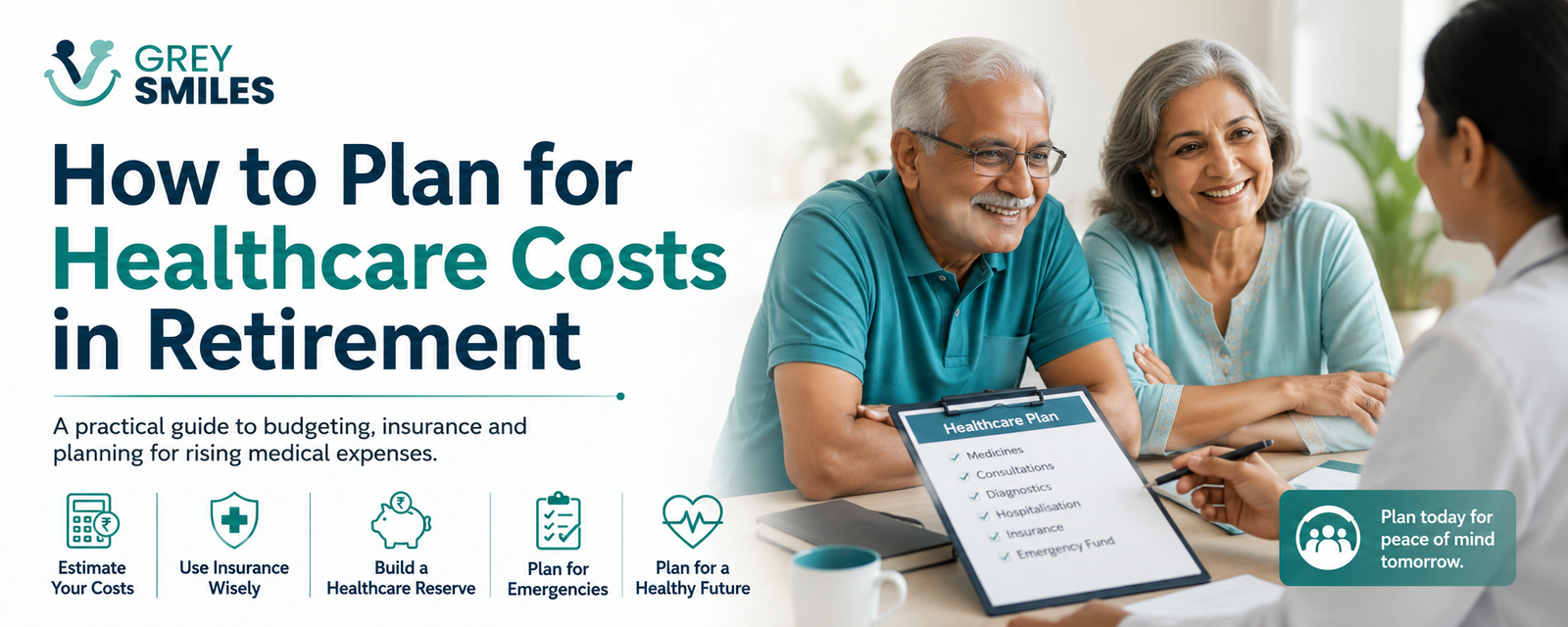
At a Glance
- Healthcare should be treated as part of your retirement plan, not as an expense to be dealt with later.
- Start with what you actually spend today on medicines, consultations, tests and other healthcare.
- Consider how your healthcare needs and costs could change over a long retirement.
- Health insurance can provide important protection, but it may not cover every healthcare expense.
- Plan separately for regular healthcare spending and costs that are difficult to predict.
Retirement planning often focuses on everyday living expenses, travel, housing, inflation and the retirement corpus. Healthcare can receive less attention because it is difficult to predict how much you may eventually need to spend.
That does not mean healthcare should be treated as an afterthought. Regular medicines, consultations, diagnostic tests, dental care, hospitalisation and other healthcare needs can become an important part of household spending over a long retirement. The objective is not to predict every future medical bill, but to understand your current spending, review your protection and make room for costs that are difficult to predict.
What Can Healthcare Cost in Retirement?
Healthcare spending is broader than the monthly medicine bill. When planning for retirement, consider the types of expenses that could realistically matter in your household.
| Expense | What to consider |
|---|---|
| Medicines | Regular and long-term prescriptions. |
| Consultations | Routine specialist and follow-up visits. |
| Diagnostics | Blood tests, scans and other investigations. |
| Hospitalisation | Planned and unexpected hospital expenses. |
| Dental and vision | Expenses that may not always be fully covered by insurance. |
| Ageing-related care | Home nursing, rehabilitation or other assistance when needed. |
Not every retiree will incur all of these costs. The useful exercise is to identify which expenses could realistically matter in your own situation and include them in your retirement planning.
Start With Your Current Healthcare Spending
The easiest place to begin is with what you already spend. Look at the last 12 months and estimate your annual spending on medicines, doctors, tests, dental care, vision care and other healthcare needs. Include recurring expenses as well as significant expenses that may not occur every month.
Do not focus only on the largest individual bill. Recurring expenses can become significant when they continue year after year, and your current spending gives you a practical starting point for thinking about healthcare during retirement.
GREYSMILES CALCULATOR
Plan for Future Healthcare Costs
Your current healthcare spending is a useful starting point, but it may not remain the same throughout retirement. Use the GreySmiles Health Inflation Planner to explore how your annual healthcare spending could change over your planning horizon.
Use the Health Inflation Planner →
Illustrative planning tool only. Actual healthcare costs can vary depending on medical needs, treatment, inflation, insurance coverage and individual circumstances.
Separate Regular and Unexpected Healthcare Costs
Not all healthcare expenses behave in the same way. Regular medicines, consultations and tests are relatively easier to budget for, while hospitalisation, surgery, rehabilitation or an extended period of care can be much harder to predict.
Your retirement plan can therefore look at two layers: the healthcare spending you expect to incur regularly and the additional costs that could arise unexpectedly or may not be fully covered by insurance.
- Regular healthcare spending: medicines, consultations, tests and routine care that you expect to pay for.
- Unexpected healthcare costs: expenses that may arise suddenly or may not be fully covered by insurance.
This is also where the idea of a separate healthcare reserve becomes relevant. If you want to explore that question in detail, see How Much Should You Keep Aside for Healthcare in Retirement?, which focuses specifically on the role of a dedicated healthcare reserve.
Understand What Your Health Insurance Actually Covers
Health insurance is an important part of healthcare planning, but having a policy does not mean that every future healthcare expense will be paid by the insurer. The actual protection depends on the terms of the policy, including matters such as exclusions, waiting periods, deductibles, co-payments and sub-limits.
The practical question for retirement planning is therefore not simply whether you have health insurance. It is how much of your potential healthcare spending could still have to come out of your own pocket.
If your specific question is whether your existing policy provides adequate protection for retirement, see Is My Health Insurance Enough for Retirement?.
If you are still working and rely primarily on employer-provided health insurance, there is another issue to address before retirement. What Happens to My Health Insurance When I Retire? looks specifically at the transition from employment-linked cover to retirement.
Think About Healthcare Inflation
A healthcare budget that looks comfortable today may not remain comfortable throughout a long retirement. Consultation fees, medicines, diagnostics and treatment costs can change over time, while your own healthcare needs may also change as you grow older.
This is why healthcare planning should not be a one-time calculation made immediately before retirement. Review your actual spending periodically and revisit your assumptions when your health, insurance, family circumstances or retirement plans change.
GreySmiles Take
Don’t ask only, “How much do I spend on healthcare today?” Also ask, “What happens to my retirement plan if my healthcare spending becomes significantly higher later?”
The purpose of healthcare planning is not to predict the future. It is to make your retirement plan more resilient to costs you cannot predict precisely.
Build Room for Healthcare Uncertainty
A dedicated healthcare reserve can provide an additional layer of protection alongside your retirement corpus and health insurance. The appropriate amount will depend on your circumstances, including your current healthcare spending, insurance coverage, family situation and the level of financial flexibility you want to maintain.
The important distinction is that this article looks at the overall healthcare-planning framework. The separate healthcare reserve guide looks more closely at how to think about the amount you may want to keep accessible.
Plan for More Than Medicines
Regular medicines are easy to remember because they appear as a monthly expense. Other healthcare costs can be less visible, particularly as healthcare needs change with age.
Depending on your circumstances, your planning may need to consider dental treatment, eye examinations, hearing-related expenses, medical equipment, physiotherapy, rehabilitation, home healthcare or nursing. Not every retiree will incur these costs, so the aim is not to create a universal checklist but to identify the areas that could realistically matter to you.
What About Your Spouse?
For couples, healthcare planning should cover both people rather than simply multiplying one person’s current spending by two. Health needs, medicines, insurance coverage and healthcare spending can differ significantly between spouses.
Review both sets of healthcare expenses separately and then bring them together into the household retirement plan. This becomes particularly important when one spouse has different insurance coverage, higher healthcare needs or expects to remain financially dependent on the household for longer.
Bring Healthcare Into Your Retirement Numbers
Healthcare planning should connect directly with the larger retirement plan. A retirement corpus needs to support everyday living for potentially many years, and healthcare is one of the expenses that can change as you move through retirement.
That is why healthcare should be considered before the retirement number is finalised, rather than added later as a miscellaneous expense. If you are working through how much you may need for retirement, include realistic healthcare spending alongside housing, food, travel, insurance, family commitments and other major expenses.
A Simple Healthcare Planning Checklist
- Calculate your current annual healthcare spending.
- Separate recurring expenses from unexpected costs.
- Review your health insurance and understand its important terms and limitations.
- Identify the healthcare expenses you may need to fund yourself.
- Consider how healthcare spending could change over a long retirement.
- Consider both spouses’ expected healthcare needs.
- Connect the healthcare plan with your wider retirement corpus and income plan.
- Review the plan when your circumstances change.
When Should You Start?
The best time to think about healthcare costs is before retirement, when you still have time to adjust your savings and broader retirement plan. You do not need to know exactly what your medical expenses will be twenty years from now.
Start with your actual healthcare spending, review your insurance and identify the costs you may still have to fund yourself. Then use those numbers as part of your retirement planning. If you are already retired, the same approach applies: your actual spending gives you a better starting point than a generic estimate.
If You Are Planning Your Retirement Now
Start with your household’s actual healthcare spending over the past year. Separate predictable costs from uncertain ones, use the Health Inflation Planner to understand how today’s spending could change over time, and review the healthcare costs you may still have to fund yourself.
Finally, bring the healthcare picture back into your wider retirement plan. This sequence is more useful than trying to guess one large healthcare number at the beginning.
FAQs
How much should I set aside for healthcare in retirement?
There is no single amount that works for everyone. Start with your actual healthcare spending, then consider your insurance coverage, family circumstances, age and the possibility of higher healthcare costs later in retirement. For a more detailed discussion of the healthcare reserve itself, see How Much Should You Keep Aside for Healthcare in Retirement?.
Does health insurance cover all healthcare costs after retirement?
No. The amount covered depends on the policy and the treatment involved. Exclusions, waiting periods, deductibles, co-payments, sub-limits and other policy conditions can affect what you eventually pay yourself.
Should healthcare costs be included in my retirement corpus?
Yes. Healthcare is a genuine retirement expense and should form part of your long-term retirement planning rather than being treated as an afterthought.
How can I prepare for unexpected medical expenses?
Start by understanding your insurance coverage and the healthcare expenses you may have to fund yourself. An accessible healthcare reserve can provide additional financial flexibility, although the appropriate amount depends on your circumstances.
Should couples plan healthcare expenses separately?
Yes. Each spouse may have different healthcare needs, medicines and insurance coverage. Estimate both separately before creating the household retirement plan.
Sources & References
Disclaimer: This article is for general educational purposes and is not a substitute for medical, financial or insurance advice. Healthcare needs and costs vary significantly between individuals. Review your insurance policy and consult appropriate professionals before making healthcare or financial decisions.




Start the conversation
Share a helpful experience, ask a thoughtful question, or add another perspective for fellow readers.