
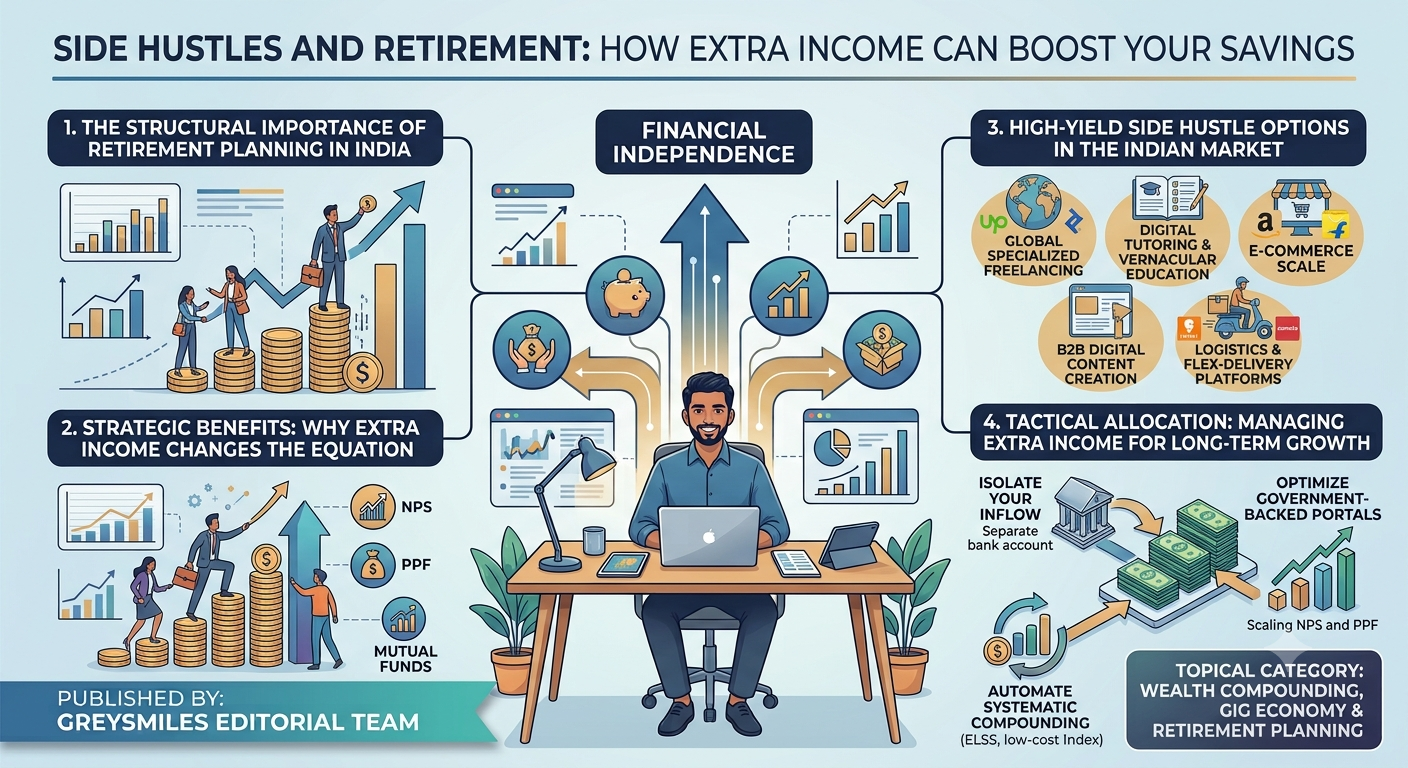
A strategic matrix mapping the connection between modern side hustles and retirement readiness in India, detailing high-yield gig streams and disciplined automation pathways into systematic compounding portals.
1. The Structural Importance of Retirement Planning in India
The scale of the retirement deficit across the domestic landscape highlights a clear reality: immediate self-reliance is vital for long-term fiscal stability. The broader statistics paint a compelling picture for early wealth compounding:
- The Savings Gap: Data from the National Pension System (NPS) highlights that only about 15% of India’s aggregate working population sets aside sufficient capital for their post-employment years. This deficit places an immense burden on individuals navigating a shifting economic landscape mid-career.
- The Allocation Disconnect: Formal evaluations by the Reserve Bank of India (RBI) show that a mere 27% of citizens are actively allocating capital into designated retirement investment channels. Relying purely on basic, low-yield savings instruments often means a portfolio struggles to outpace long-term medical and lifestyle inflation.
To learn how to protect your primary savings from hidden economic erosion, read our detailed breakdown on Wealth Compounding and guide on Navigating Healthcare Inflation.
2. Strategic Benefits: Why Extra Income Changes the Equation
Integrating a flexible second revenue pipeline into your routine completely changes your financial trajectory. It bypasses the linear limits of standard corporate appraisal cycles by creating immediate, investable surplus capital.
- Flexible Revenue Channels: Modern side options allow professionals to monetize their personal time without disrupting primary operational commitments. The broader digital ecosystem provides accessible pathways for cross-border freelancing, software design, and localized services.
- Accelerating the Savings Rate: Leading global freelancer evaluations indicate that over 77% of independent operators in India report a significantly higher personal savings baseline after establishing a second stream. By dedicating 100% of this supplementary cash flow straight to investment accounts, you protect your baseline lifestyle while boosting your long-term wealth trajectory.
- Long-Term Skill Arbitrage: Beyond immediate cash flow, secondary projects serve as an excellent sandbox to learn new technologies and build specialized domain expertise. This continuous upskilling increases overall professional value, translating to higher primary compensation and stronger career prospects over time.
3. High-Yield Side Hustle Options in the Indian Market
The digital economy has democratized access to scalable, independent business models. Choosing an avenue depends entirely on your specific professional background, time availability, and long-term financial targets:
- Global Specialized Freelancing: Utilizing specialized networks like Upwork, Fiverr, or TopTal allows developers, copywriters, and digital marketing strategists to quote competitive global rates, arbitrage currency differences, and generate strong secondary income.
- Digital Tutoring & Vernacular Education: The rapid growth of educational technology has unlocked massive demand for target subject mastery and standardized exam preparation, offering a reliable income model for professionals with strong academic backgrounds.
- E-Commerce Scale: Launching targeted product listings on centralized marketplaces like Amazon, Flipkart, or international channels like Etsy turns specialized creative crafts or managed supply chains into scalable e-commerce micro-ventures.
- B2B Digital Content Creation: Building high-authority blogs, targeted video series, or niche corporate podcasts creates multiple high-margin monetization options, spanning premium programmatic ad networks to direct brand sponsorships.
- Logistics & Flex-Delivery Platforms: Operational networks like Swiggy, Zomato, Uber, or Ola provide immediate cash conversion loops. While these logistics roles are occasionally undervalued in traditional circles, they offer essential operational dignity, complete schedule control, and dependable cash returns for individuals optimizing short-term financial runways.
4. Tactical Allocation: Managing Extra Income for Long-Term Growth
The real value of secondary income isn’t determined by how much you make, but by the discipline of your allocation strategy. Unmanaged financial surplus often disappears into casual lifestyle inflation.
- Isolate Your Inflow: Establish a dedicated bank account exclusively for secondary income streams. Keeping these funds separate prevents casual spending and creates a clean pipeline for automated Systematic Investment Plans (SIPs) without impacting your primary checking account.
- Automate Systematic Compounding: Route your secondary income directly into high-yield, structural investment vehicles. Balancing allocations across low-cost index funds, Equity Linked Savings Schemes (ELSS), and the Public Provident Fund (PPF) helps compound wealth smoothly while building long-term tax efficiencies.
- Optimize Government-Backed Portals: Actively scaling your contributions within the National Pension System (NPS) lets you capture valuable tax advantages under Section 80CCD, ensuring your secondary gig revenue directly funds a regulated corporate retirement pipeline.
- Implement Strict Micro-Budgeting: Use advanced budgeting tools to log every secondary invoice and cross-border payment. Clear financial tracking ensures that a set percentage of every gig check is automatically moved to your investment accounts before it can be spent elsewhere.
Conclusion: Securing Financial Freedom Through Active Self-Direction
In a rapidly changing economic ecosystem, the integration of targeted side hustles and retirement planning has emerged as a definitive roadmap for professionals looking to safeguard their future security. As India’s digital economy evolves, transitioning away from passive financial habits toward active, intentional wealth creation is a crucial step in building long-term peace of mind.
By identifying the ideal secondary niche, upskilling continuously, and routing that extra income into robust, compounding financial assets, you can drastically accelerate your retirement readiness. Ultimately, maximizing a secondary income stream is about more than expanding your monthly earnings—it is about taking complete ownership of your career trajectory and designing a resilient financial runway for your family.




Start the conversation
Share a helpful experience, ask a thoughtful question, or add another perspective for fellow readers.