
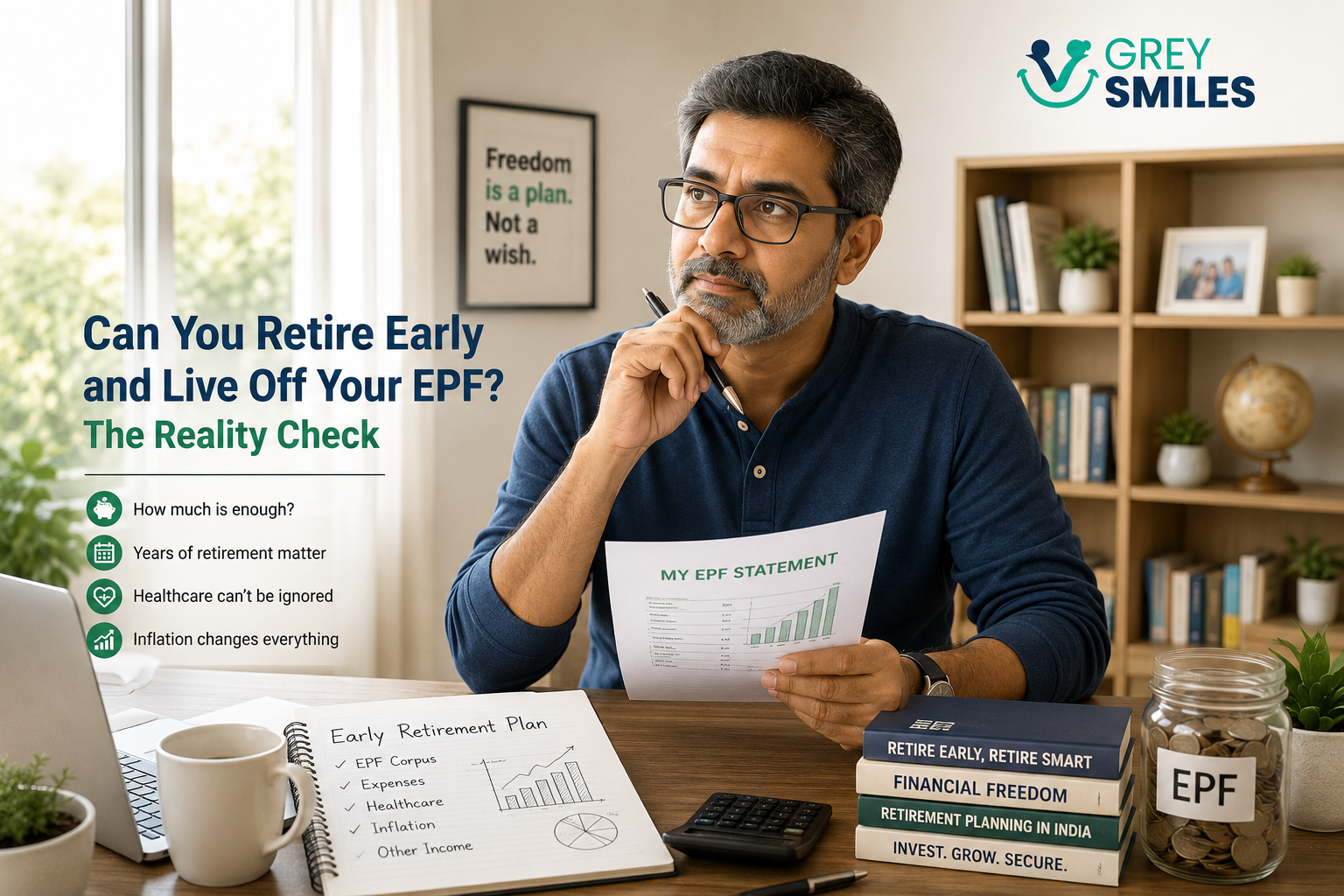
EPF can become a powerful retirement asset. But can you stop working at 50, cash out your EPF and live on the interest? The answer depends on much more than the balance you see in your EPFO account.
At a Glance: Can EPF Fund Early Retirement?
- EPF can be a major part of an early-retirement plan, but it is rarely the whole plan.
- The size of your EPF balance is only one number. Your spending, other assets, healthcare needs and years of retirement matter just as much.
- EPF interest is not the same as a monthly pension. The money stays in the account until you use an eligible withdrawal or transfer route; you do not simply receive the annual interest as a monthly salary.
- Retiring at 50 is a much bigger financial challenge than retiring at 60. Your money may need to support you for several additional decades.
Imagine you are 50, your children are largely independent, your home loan is finished and your EPF balance has crossed ₹1 crore.
The obvious question is: “Can I stop working now and live off my EPF?”
It is a tempting idea, especially when EPF has been one of the most dependable long-term savings vehicles for salaried Indians. But there is a big difference between having a large EPF balance and having a retirement income plan.
EPF can help you retire early. EPF alone may not be enough to keep you retired.
First, Separate EPF From EPS
One source of confusion is that salary deductions often make EPF and EPS feel like one retirement bucket. They are not.
EPF is the provident-fund accumulation you see as a balance that grows through contributions and credited interest. EPS is the pension component, subject to its own eligibility rules.
EPFO currently states that members with the required eligible service can normally draw EPS pension at 58, while reduced pension can be taken from age 50 subject to the applicable conditions. The reduced pension does not later become the full pension merely because the member reaches 58. ([EPFO FAQ])
This matters if your early-retirement plan assumes that a pension will start immediately after you leave work.
Can You Actually Withdraw Your EPF When You Retire Early?
This is where many early-retirement discussions become too simplistic.
The EPF Scheme provides for full withdrawal in specified circumstances, including retirement from service after attaining 55. There are also other withdrawal provisions, and EPFO introduced significant withdrawal reforms in 2025. Its October 2025 communication said eligible members could withdraw up to 75% under specified rules, while final settlement was extended to 12 months to encourage preservation of retirement savings. ([EPF Scheme]; [EPFO reform communication])
So if you leave employment at 50, do not assume that “I have stopped working” automatically means “I can freely withdraw the entire EPF balance today.” The exact route depends on your circumstances and the applicable EPFO provisions at the time you leave.
Check the current EPFO rules before building an early-retirement plan around a lump-sum withdrawal.
What If You Leave the EPF Invested?
This is where EPF can become interesting for someone retiring early.
EPFO’s official material indicates that an account can continue to earn interest up to the relevant inoperative/age rules, rather than simply stopping the day you leave employment. EPFO’s FAQs state that accounts can continue earning interest up to age 58 under the current framework, subject to the applicable rules. ([EPFO FAQ])
That does not mean you should automatically leave the entire corpus untouched. It means the decision should be part of a larger plan: how much should remain in EPF, how much should be accessible elsewhere and how much income you need before other retirement resources become available.
So How Much Income Can a Large EPF Balance Represent?
Here’s a useful mathematical illustration. EPFO’s Central Board recommended an 8.25% annual interest rate for EPF accumulations for FY 2025–26, subject to the government’s formal notification. ([EPFO CBT minutes])
Using 8.25% purely as an illustration, the annual interest equivalent on different balances would look like this:
| EPF balance | Illustrative annual interest at 8.25% | Monthly equivalent |
|---|---|---|
| ₹50 lakh | ₹4.13 lakh | ~₹34,375 |
| ₹1 crore | ₹8.25 lakh | ~₹68,750 |
| ₹1.5 crore | ₹12.38 lakh | ~₹1.03 lakh |
But do not mistake this table for a monthly EPF payout. EPF is not an annuity that automatically sends you ₹68,750 every month because your balance is ₹1 crore. The figures are simply annual-interest mathematics converted into a monthly equivalent.
And the moment you start using the corpus itself, the calculation changes again.
The Early-Retirement Problem: Your Money Has to Last Longer
Suppose you retire at 50 and need ₹75,000 a month for your household expenses. That is ₹9 lakh a year before considering inflation, healthcare surprises or large one-off expenses.
A ₹1 crore corpus may therefore look substantial, but the question is not simply whether the annual interest is close to your annual spending. What happens when inflation pushes your expenses higher? What happens if you need ₹5 lakh for a medical event? What happens if your other investments fall at the same time you need cash?
The younger you retire, the more important longevity risk becomes.
This is why our 6 Stages of Retirement Planning framework matters. Early retirement changes not just your income date, but the length of the period your savings need to support.
EPF + Other Assets Is a Much Better Question
Instead of asking, “Can I retire on EPF?”, ask: “Can my entire financial system support early retirement?”
That system might include EPF, mutual funds, PPF, bank deposits, property income, consulting income, other investments and eventually pension income.
Your retirement corpus calculation should bring all of these together and compare them with your expected expenses—not treat EPF as if it were the entire retirement plan.
The other important issue is sequencing. You may want to use some assets for the years immediately after retirement while allowing others to remain invested for longer. Our 3-Bucket Retirement Strategy explains one practical way of separating near-term spending money from medium- and long-term assets.
Don’t Forget Healthcare
Early retirement means planning for a longer period of healthcare expenses too. Health insurance may protect you from a large hospital bill, but medicines, diagnostics, co-payments, non-covered items and future care costs still need planning.
Our guide to healthcare budgeting for retirement is worth reading alongside an early-retirement calculation, particularly if you are considering stopping work before 55.
What About Tax?
For a recognised provident fund, the Income Tax Department states that withdrawals after five years of continuous service are generally exempt from tax, while withdrawals before five years can become taxable except in specified circumstances. The department also identifies special rules for interest relating to employee contributions above the applicable annual thresholds. ([Income Tax Department — Taxability of Retirement Benefits])
So if your early-retirement plan involves taking a large EPF withdrawal soon after leaving employment, check the tax treatment rather than assuming the entire amount will automatically be tax-free.
This is one reason the best early-retirement plan is often more nuanced than “quit job and withdraw PF”.
A Simple Early-Retirement Test
Before handing in your resignation, ask yourself five questions:
- What do I actually spend today? Not what I think I spend—what do the last 12 months of bank and card records show?
- How much of that spending will continue after I stop working? Some costs may fall; healthcare, travel or family support may rise.
- How much income will I have apart from EPF? Include pension, rent, investments and any realistic part-time income.
- How will I fund the first five to ten years? Early retirement often requires more liquidity than traditional retirement.
- What happens if I live to 90? Test the plan against a long retirement rather than assuming an average lifespan.
The GreySmiles Reality Check
A large EPF balance can help you retire early. It does not automatically make early retirement sustainable. The real test is whether your EPF, other assets and income sources together can fund your spending, healthcare and inflation for as long as you may need them.
So, Can You Retire Early and Live Off Your EPF?
Possibly—but “live off EPF” is the wrong way to think about it.
If you have a substantial EPF balance, low essential expenses, other investments, healthcare protection and a realistic withdrawal plan, EPF can be a powerful foundation for early retirement.
If your entire plan depends on taking a large lump sum at 50 and earning the same return forever, it is much harder to make the numbers work.
The question is not whether EPF is good enough.
The question is whether your entire retirement plan is good enough.
Before You Retire Early, Check These Numbers
Calculate your monthly essential expenses, total retirement corpus, EPF balance, other investable assets, guaranteed income, healthcare reserve and the number of years your money may need to last. Once these are visible together, you can have a much more honest conversation with yourself about whether 50, 52, 55 or 60 is actually the right retirement age.
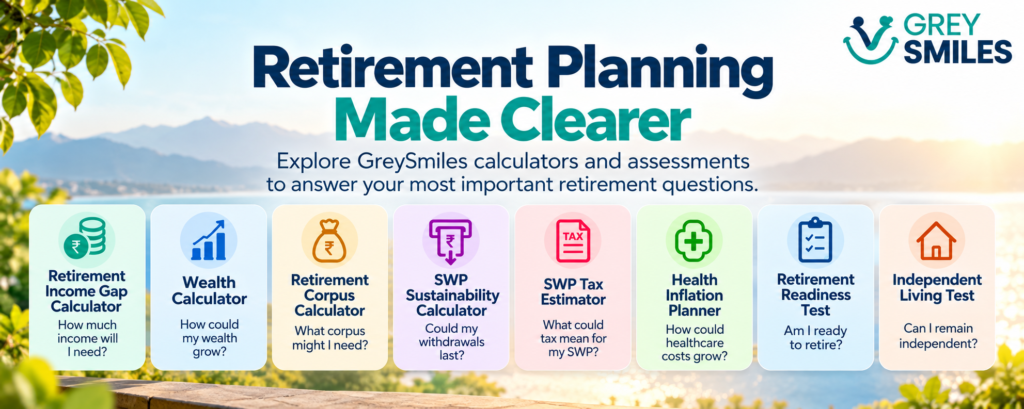
And if you’re unsure where you stand, take the GreySmiles Retirement Readiness Test before making the decision.
Disclaimer: This article is for general education and illustration only. EPFO rules, interest rates, withdrawal provisions, pension rules and tax treatment can change. Eligibility for withdrawal or pension depends on individual circumstances and the applicable rules at the time. Check current EPFO and Income Tax Department guidance and obtain qualified professional advice before making a decision to retire early.



Start the conversation
Share a helpful experience, ask a thoughtful question, or add another perspective for fellow readers.