
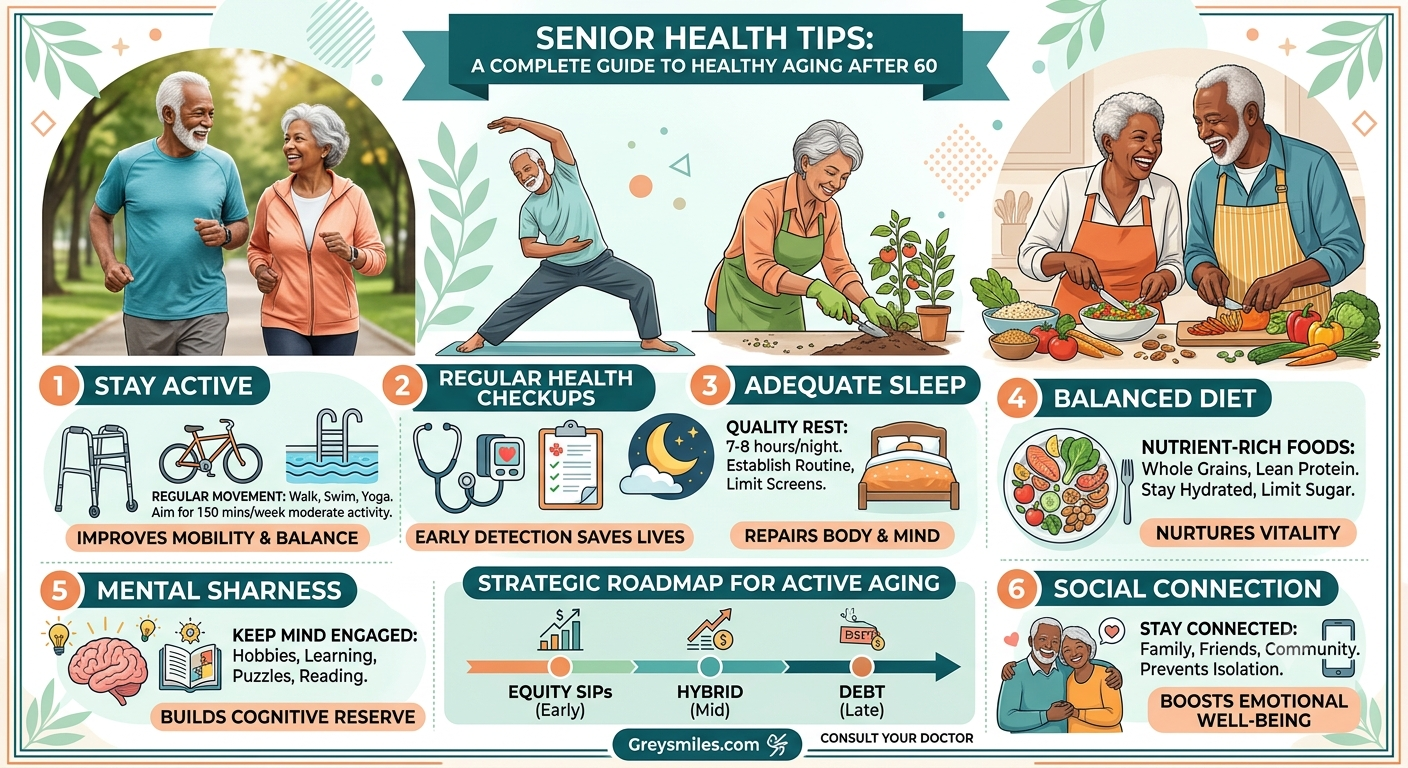
Getting older does not automatically mean becoming less active or less independent.
But staying well after 60 often requires more deliberate attention than it did earlier in life. Strength, mobility, nutrition, sleep, medicines, preventive care and social connections all become part of the picture.
The goal is not to chase perfect health. It is to protect the ability to do the things that matter to you for as long as possible.
That means thinking about health not only when something goes wrong, but as part of everyday life after 60.
What Good Health After 60 Really Means
Good health in later life is not simply the absence of disease.
For many older adults, a more useful measure is functional independence:
- Can you walk comfortably?
- Can you climb stairs safely?
- Can you manage your medicines?
- Can you prepare or arrange your own food?
- Can you travel and meet people?
- Can you manage your finances and appointments?
- Can you continue doing the activities that give your life meaning?
Some medical conditions may be unavoidable. But maintaining strength, mobility, good routines and social connections can help preserve independence even when health is no longer perfect.
1. Keep Moving — But Move for a Reason
Regular physical activity is one of the most useful habits to maintain as you age.
You do not necessarily need an elaborate gym programme. Walking, strength exercises, balance work, stretching, swimming, cycling or other suitable activities can all have a place.
The right activity depends on your current fitness, medical conditions, previous injuries and abilities.
The important thing is consistency.
A practical routine might include some combination of:
- regular walking or other aerobic activity;
- strength exercises appropriate to your ability;
- balance exercises;
- mobility and flexibility work; and
- activities that you actually enjoy enough to continue.
If you have been inactive for a long period, or have a significant medical condition, discuss an appropriate exercise programme with your healthcare professional before starting something strenuous.
2. Strength Matters More Than Many People Realise
Muscle strength becomes particularly important with age.
It affects everyday activities such as getting up from a chair, carrying groceries, climbing stairs and maintaining balance.
That makes strength training different from exercising simply to improve appearance or athletic performance.
For an older adult, maintaining functional strength can be about maintaining independence.
Even relatively simple resistance exercises can be useful when performed safely and appropriately.
3. Take Falls Seriously
A fall can have consequences that extend well beyond the injury itself.
Fear of falling can lead someone to move less. Moving less can lead to further loss of strength and confidence, creating a cycle that makes independent living harder.
Look around your home for preventable hazards:
- loose rugs and carpets;
- poor lighting;
- clutter around walking areas;
- slippery bathroom surfaces;
- awkwardly placed electrical wires; and
- objects that require climbing or stretching to reach.
Handrails, appropriate bathroom support and better lighting can sometimes make a meaningful difference.
If you have experienced a fall or feel unsteady while walking, discuss it with a healthcare professional rather than simply accepting it as an inevitable part of ageing.
4. Pay Attention to Nutrition
Eating well after 60 does not require abandoning familiar Indian food.
Traditional meals can often be adapted around individual nutritional needs.
As we age, maintaining adequate nutrition becomes increasingly important, particularly when appetite changes, dental problems, difficulty cooking or other health issues affect eating habits.
A sensible diet should generally include a variety of vegetables and fruits, appropriate protein sources, whole grains or other suitable carbohydrate sources and adequate fluids, while limiting excessive salt, added sugar and highly processed foods.
Specific nutritional requirements can vary significantly between individuals, particularly when someone has kidney disease, diabetes, heart disease or other conditions.
Do not make major dietary changes simply because a particular diet is trending online. Your healthcare professional or registered dietitian can help adapt your diet to your actual needs.
5. Stay on Top of Medicines
Many older adults take several medicines at the same time.
That makes medication management an important part of staying healthy.
Keep an up-to-date list of:
- prescription medicines;
- over-the-counter medicines;
- supplements;
- dosages;
- when each medicine is taken; and
- the doctor or specialist who prescribed it.
Take medicines according to the prescribed instructions and do not stop a long-term medicine simply because you feel better.
If several doctors are involved in your care, make sure they know about the medicines prescribed by the others.
It is also worth periodically asking whether every medicine is still necessary, particularly when prescriptions have accumulated over several years. Any change should be made with the appropriate medical professional.
If recurring medicine expenses are becoming significant, GreySmiles also looks at ways to reduce medicine costs in retirement without treating cost-cutting as a substitute for appropriate treatment.
6. Do Not Skip Preventive Healthcare
It is easy to become focused on existing health conditions and forget preventive care.
Regular medical reviews can help identify changes that deserve attention. The appropriate screening and frequency depend on age, sex, family history, medical history and individual risk.
Keep track of appointments and follow the preventive-care recommendations made by your healthcare professionals.
Do not assume that every screening test promoted online is necessary for everyone. Preventive healthcare works best when it is appropriate to the individual rather than driven by a generic checklist.
7. Look After Your Eyes, Ears, Teeth and Feet
Some aspects of ageing-related health are easy to overlook because they may not initially feel like major medical issues.
Changes in vision or hearing, dental problems and foot problems can nevertheless affect mobility, confidence, communication and independence.
For example, poor vision can increase the risk of falls. Hearing difficulties can make social interaction harder. Dental problems can affect what someone is able to eat comfortably.
Regular professional assessment where appropriate can help identify problems before they become major barriers to everyday life.
8. Protect Your Sleep
Sleep patterns can change with age, but persistent poor sleep should not simply be dismissed as “part of getting old”.
Maintain a reasonably consistent sleep routine and pay attention to factors that interfere with sleep, such as excessive caffeine late in the day, irregular schedules or an uncomfortable sleeping environment.
If you regularly struggle to sleep, wake excessively during the night or feel unusually tired during the day, discuss it with a healthcare professional.
Sleep problems can sometimes be associated with underlying medical conditions or medicines and may deserve investigation.
9. Stay Socially Connected
Health is not only physical.
Retirement can remove many of the social interactions that came automatically through work. Children may live in different cities or countries. Friends may move away or become less mobile.
Without deliberate effort, social isolation can gradually increase.
Make room for relationships and activities that bring regular human contact:
- meeting friends;
- family conversations;
- community activities;
- volunteering;
- clubs or interest groups;
- learning something new; or
- regular walks with other people.
Social connection should not be treated as an optional luxury after the “important” financial and medical planning is finished. It is part of the life that retirement is supposed to support.
10. Keep Your Brain Engaged
You do not need to solve puzzles for hours every day to “keep your brain young”.
What matters more is continuing to learn, think, communicate and engage with the world.
Reading, learning a language, playing music, teaching someone, travelling, pursuing a hobby or simply having meaningful conversations can provide mental stimulation.
If you notice persistent or significant changes in memory, judgement or daily functioning, discuss them with a healthcare professional rather than trying to diagnose yourself.
11. Look After Mental and Emotional Wellbeing
Retirement can bring freedom, but it can also involve loss of routine, identity, relationships or a sense of purpose.
Grief, loneliness, anxiety and low mood should not automatically be dismissed as inevitable parts of ageing.
Pay attention to persistent changes in mood, motivation, sleep, appetite or social behaviour.
Talking to trusted people can help. Professional support may also be appropriate when difficulties persist or interfere with daily life.
12. Make Your Home Support Independence
Your home can either make ageing easier or gradually make everyday activities more difficult.
Think about accessibility before a crisis forces the issue.
Could you comfortably use the bathroom if your mobility declined? Are stairs manageable? Is the kitchen easy to use? Is there adequate lighting at night? Could someone with reduced balance move safely through the house?
These questions become particularly important if you intend to remain living independently as you age.
Independence does not necessarily mean doing everything alone. It means creating an environment in which you can continue to make choices and manage daily life safely.
13. Plan for Healthcare Costs Too
Good health habits cannot eliminate healthcare expenses.
Regular medicines, consultations, tests, dental care, glasses, hospitalisation and future care needs can all affect retirement finances.
That is why healthcare planning should sit alongside retirement planning rather than being treated as an unexpected expense whenever it occurs.
GreySmiles’ healthcare-cost planning framework looks at regular healthcare spending, unexpected costs, insurance and healthcare reserves.
You can also read How Much Should You Keep Aside for Healthcare in Retirement? for a closer look at the idea of maintaining a separate healthcare reserve.
Use the GreySmiles Health Inflation Planner
GREYSMILES CALCULATOR
What Could Your Healthcare Spending Look Like in the Future?
If you know roughly what you spend on healthcare today, you can use the GreySmiles Health Inflation Planner to see how that expense could change over your planning horizon under different inflation assumptions.
This is not a prediction of your actual future medical bills. It is a planning exercise that can help you understand why today’s healthcare budget may not be enough years from now.
Use the Health Inflation Planner
Illustrative planning tool only. Actual healthcare costs vary by individual, treatment, location, insurance and future medical needs.
14. Do Not Let Healthcare Planning Become Fear Planning
It is sensible to prepare for healthcare costs. It is not helpful to spend retirement constantly worrying about everything that could go wrong.
A good plan has several layers:
- appropriate preventive care;
- health insurance where suitable;
- accessible savings for out-of-pocket expenses;
- a realistic retirement budget; and
- family and professional support when required.
The purpose of planning is to create resilience, not anxiety.
15. Keep an Emergency Health File
A simple health-information file can make life easier for you and your family.
Depending on your circumstances, keep an accessible record of:
- current medicines;
- known allergies;
- important medical conditions;
- doctors and specialists;
- insurance details;
- recent relevant reports;
- emergency contacts; and
- important instructions your family may need in an emergency.
Keep sensitive information secure and make sure trusted family members know where the essential information can be found if needed.
16. Have a Plan for When You Need Help
Independence should not mean refusing help until there is a crisis.
Think ahead about who could help with transport, hospital visits, medicines, household tasks or financial administration if you temporarily become unable to manage them yourself.
This becomes especially important for people whose children live in another city or overseas.
Planning for support is not admitting defeat. It is recognising that independence can sometimes depend on having the right support around you.
A Simple Senior Health Routine
You do not need to transform your entire life overnight.
A practical weekly routine might include:
- regular physical activity;
- strength and balance work appropriate to your abilities;
- nutritious meals and adequate hydration;
- medicines taken as prescribed;
- adequate sleep;
- social interaction;
- time outdoors where practical;
- activities that keep you mentally engaged; and
- appropriate medical and preventive care.
The value comes from doing these things consistently rather than perfectly.
When Should You Talk to a Doctor?
Do not wait for the next routine appointment if you experience a sudden or concerning change in your health.
Seek appropriate medical attention for symptoms that are severe, sudden, persistent or significantly different from your normal condition.
Similarly, recurring falls, unexplained weight loss, persistent fatigue, major changes in memory or mood, difficulty managing medicines or a noticeable decline in everyday functioning deserve professional attention.
This article cannot tell you whether a particular symptom is serious. That is a medical decision requiring assessment of the individual.
GreySmiles Take
Healthy ageing is not about trying to remain the person you were at 40.
It is about protecting the independence, relationships and activities that matter to you as your body changes.
That means taking strength and mobility seriously, staying socially connected, managing medicines carefully, preparing your home for changing needs and planning for healthcare costs before they become a financial emergency.
The real measure of a healthy retirement is not simply how many illnesses you avoid. It is how much of your life you remain able to choose.
Senior Health Checklist
- ☐ I stay physically active in a way appropriate for my abilities.
- ☐ I include strength and balance work where appropriate.
- ☐ I have looked for fall hazards around my home.
- ☐ I keep an up-to-date list of my medicines.
- ☐ I attend appropriate medical and preventive-care appointments.
- ☐ I pay attention to vision, hearing, dental and mobility changes.
- ☐ I eat adequately and maintain good hydration.
- ☐ I have regular social contact.
- ☐ I have activities that give me interest and purpose.
- ☐ I understand my health-insurance coverage.
- ☐ I have considered how I would meet unexpected healthcare costs.
- ☐ My family knows how to access essential health information in an emergency.
- ☐ I have thought about who could help me if I temporarily needed assistance.
Final Thoughts
Life after 60 can be active, independent and deeply rewarding, but maintaining that independence requires more than simply reacting to illness.
Movement, strength, nutrition, sleep, medication management, preventive care, social connection and a safe home all contribute to the quality of later life.
Financial planning matters too. A major healthcare expense can affect a retirement that may need to last for decades, which is why healthcare deserves a place in the wider retirement plan.
The aim is not to control every aspect of ageing.
It is to give yourself the best reasonable chance of remaining healthy enough, mobile enough and financially prepared enough to keep living the life you want.
Sources & References
- World Health Organization – Ageing and Health
- CDC – Older Adult Health
- Ministry of Health & Family Welfare, Government of India
Disclaimer: This article is for general educational purposes and is not a substitute for personalised medical advice. Health needs, exercise capacity, nutrition requirements, screening needs and treatment decisions vary between individuals. Consult an appropriately qualified healthcare professional for advice about your specific circumstances.



Start the conversation
Share a helpful experience, ask a thoughtful question, or add another perspective for fellow readers.