
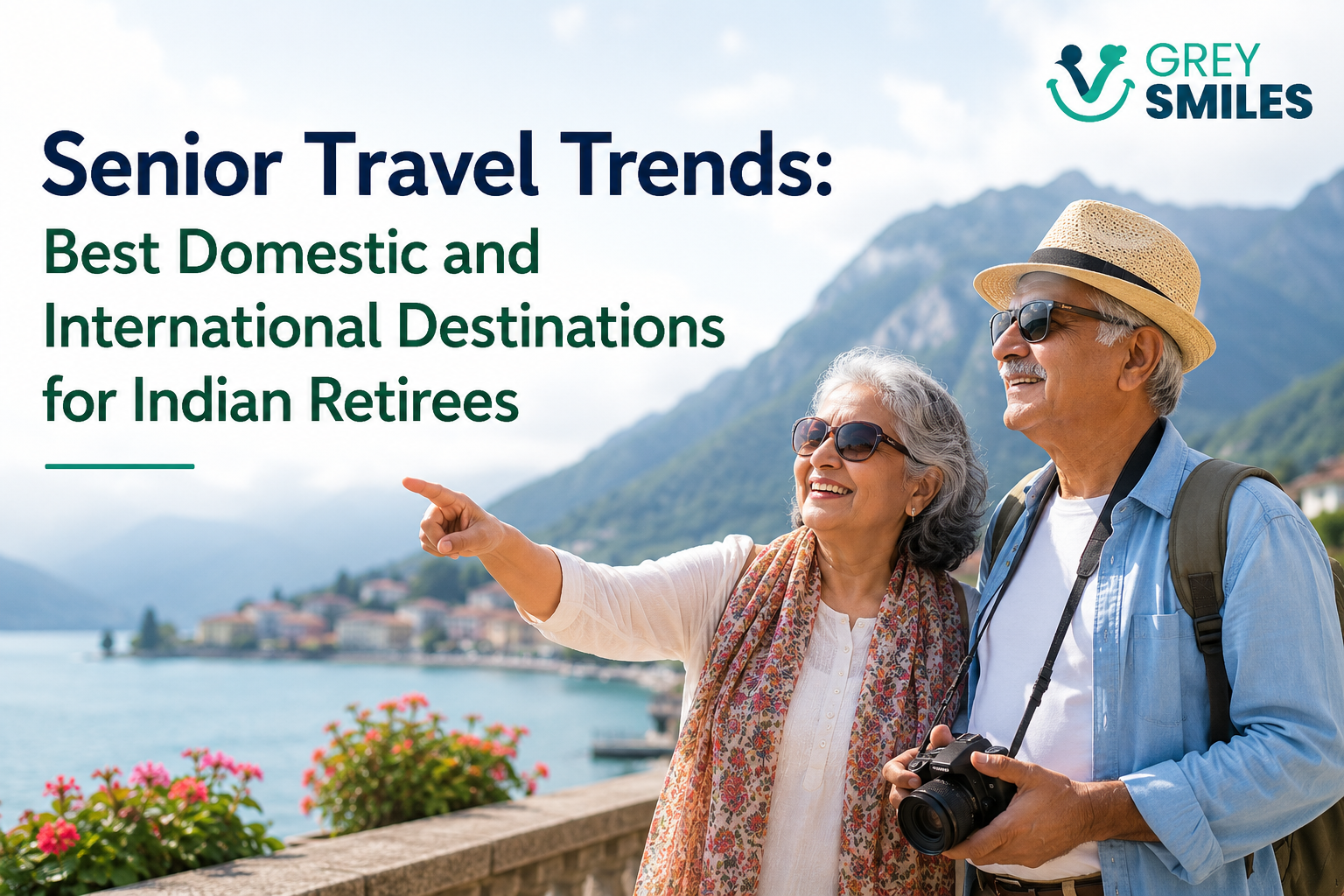
Indian retirees are embracing more active, flexible and meaningful ways to travel
The important part is not finding a universal list of the “best” destinations. It is finding places that suit your energy, mobility, interests, budget and preferred pace.
At a Glance
- Choose the travel style before choosing the destination. A relaxed holiday, heritage trip and wildlife journey require very different planning.
- India offers enormous variety without requiring an international trip. Beaches, mountains, heritage, spirituality and wildlife are all possible within the country.
- International travel does not have to mean an exhausting itinerary. Fewer hotel changes and longer stays can make a major difference.
- Comfort is part of the destination decision. Transport, accommodation, walking requirements and access to healthcare matter as much as the attractions.
- The best retirement holiday may be slower than the holidays you took while working. Having more time is an advantage worth using.
Start With the Kind of Holiday You Want
It is tempting to begin with a destination. Someone recommends Kashmir, Kerala, Rajasthan or Europe, and the planning starts from there.
After retirement, it can be useful to reverse the process.
First decide what you want from the trip. Do you want to relax? Learn? Walk through history? Spend time in nature? Visit family? Try something adventurous? Travel somewhere spiritually meaningful?
Once you know that, the destination becomes much easier to choose.
If you are still thinking about how you want to travel rather than where to go, see our guide to travel trends for senior citizens in India.
If You Want a Relaxed Beach or Coastal Holiday
A coastal holiday can work particularly well when the objective is simply to slow down. You do not necessarily need a packed sightseeing schedule. A comfortable hotel, easy access to food and local transport, and enough time to enjoy the surroundings may be all you need.
Within India, destinations such as Goa, Kerala and the Andaman & Nicobar Islands offer very different versions of a coastal break.
Goa can suit someone looking for a mixture of relaxation, food and easy local exploration. Kerala offers the possibility of combining coastal stays with backwaters, culture and wellness. The Andaman Islands can appeal to travellers looking for a more nature-oriented escape.
The practical question is not simply whether a destination has a beautiful beach. Consider how much travelling is required after arrival, how far the accommodation is from essential services and whether the daily routine will actually feel relaxing.
If You Love History, Culture and Architecture
Retirement can be an excellent time for slower cultural travel. Instead of trying to see ten monuments in a week, you can spend several days understanding a place properly.
Rajasthan, Karnataka and Tamil Nadu offer very different cultural experiences, from forts and palaces to temples, architecture, food and traditional crafts.
For older travellers, a good guide can make a cultural holiday considerably more enjoyable. You get context rather than simply moving from one attraction to another, while a sensible itinerary can reduce unnecessary walking and transfers.
There is also no need to turn every day into a sightseeing day. An afternoon spent resting or exploring a local market at your own pace is part of the experience.
If You Want Mountains and Cooler Weather
Hill destinations have long been popular with Indian travellers, but the right mountain holiday depends heavily on altitude, weather and mobility.
Uttarakhand, Himachal Pradesh and parts of the Western Ghats offer many possibilities, from quiet stays to nature walks and scenic drives.
Do not judge a mountain destination only by its scenery. Check the altitude, road conditions, distance from the nearest medical facility, availability of lifts or ground-floor accommodation and how much walking the proposed itinerary involves.
A beautiful destination can become uncomfortable if every day requires steep climbs, long road journeys or repeated hotel changes.
If Wildlife Is What You Have Always Wanted to Experience
Retirement can be a good time to take the wildlife trip you may have postponed during your working years.
Places such as Jim Corbett, Ranthambore and Kaziranga offer very different wildlife experiences, but the same principle applies: the safari itself is only one part of the trip.
Look at the journey to the property, the accommodation, safari timings, vehicle comfort and how much time you will spend travelling between locations.
A wildlife holiday does not have to mean filling every day with activities. One well-planned safari followed by time to rest can sometimes be more enjoyable than trying to maximise every available hour.
If Spirituality or Wellness Is the Purpose
Travel can also become a way to slow down mentally as well as physically.
Kerala has long been associated with Ayurveda and wellness experiences, while Rishikesh offers opportunities around yoga, meditation and spirituality. Other destinations can provide their own religious, cultural or contemplative experiences.
The important consideration is to understand what the programme actually involves. A wellness retreat can still have a demanding schedule, while a spiritual journey may involve considerable walking, queues or transfers.
Choose the experience around your own comfort rather than assuming that a destination marketed as “wellness” will automatically be easy.
If You Want a First International Trip
Retirement can create the time for an international trip that may have been difficult to fit into working life.
For a first international journey, however, the most interesting destination is not necessarily the easiest destination. Consider flight duration, visa requirements, transfers, language, local transport, healthcare access, climate and how many times you will need to change hotels.
A shorter trip with fewer destinations can be a more comfortable introduction to international travel than trying to cover several countries in one journey.
For official destination information and travel inspiration, Incredible India is a useful starting point for exploring destinations within the country.
Domestic or International? Think About the Experience
| Consideration | Domestic travel | International travel |
|---|---|---|
| Travel time | Often easier to manage. | Can involve longer flights and transfers. |
| Familiarity | Language, food and systems may be more familiar. | May require more preparation. |
| Variety | India offers substantial geographic and cultural variety. | Opens up different cultures, landscapes and experiences. |
| Planning | Can often be simpler. | May require visas, insurance and more detailed preparation. |
Neither approach is inherently better. The useful question is which type of trip gives you the experience you actually want at this stage of life.
Short Break or Longer Stay?
Retirement also gives you an option that working life often does not: staying longer.
A three-day holiday may make sense when you want a quick change of scene. A two- or three-week stay can make more sense when the purpose is relaxation, wellness, family time or simply experiencing a destination without rushing.
Longer stays can also reduce the repeated packing, unpacking and transfers that come with multi-destination travel.
If travel is an important part of your retirement lifestyle, it is worth including it realistically in your wider retirement spending plan. GreySmiles’ Retirement Corpus Calculator can help you explore the broader retirement-corpus question.
Who You Travel With Matters Too
A destination can feel completely different depending on whether you travel as a couple, with friends, with children and grandchildren, or alone.
Couples may have different ideas about walking, sightseeing, food or how early the day should begin. Friends may have different budgets and expectations. Multi-generational trips introduce another consideration: children and grandchildren may want a much more active itinerary.
Talk about these differences before booking rather than discovering them halfway through the holiday.
Solo travel can also be rewarding. If you are travelling alone after a long break, a shorter and simpler trip can be a useful way to understand what works for you.
Check the Destination Before You Book
Beautiful photographs tell you very little about how easy a destination will be to navigate.
Before booking, look beyond the attractions and ask:
- How much walking will a normal day involve?
- Are there stairs or steep slopes at the accommodation?
- Is there a lift or ground-floor room?
- How long are the transfers between airport, hotel and attractions?
- How easily can taxis or local transport be arranged?
- How close are pharmacies, hospitals and other essential services?
- What is the climate likely to be during the trip?
- Will altitude or strenuous activity be an issue?
- Can the accommodation meet any mobility or dietary requirements?
For older travellers, these practical details can matter as much as the destination itself.
Make Healthcare Part of the Travel Plan
Health planning should start before the suitcase is packed, particularly if you have significant health conditions, mobility limitations or concerns about altitude, climate or strenuous activity.
Carry an accessible record of your regular medicines, prescriptions or relevant medical documentation, emergency contacts, important medical history and insurance information.
It is also worth checking whether your existing health insurance provides any relevant cover for your trip and whether separate travel insurance is appropriate, particularly for international travel.
For a broader look at healthcare planning in retirement, see How to Plan for Healthcare Costs in Retirement.
The World Health Organization’s guidance on ageing and health recognises the importance of functional ability and adapting environments and activities to people’s individual circumstances.
GreySmiles Take
Choose the pace before you choose the place. If the itinerary looks exhausting on paper, it may feel exhausting on the ground. Having more time after retirement is an opportunity to travel differently, not simply to travel more.
Travel Destination Checklist for Indian Retirees
- What do I actually want from this trip?
- Does the destination suit my current energy and mobility?
- How much walking and climbing will be involved?
- How many transfers will I have to make?
- Is the accommodation convenient and comfortable?
- How accessible are healthcare and pharmacies?
- Does the climate suit me during the travel period?
- Would a longer stay make more sense than a packed itinerary?
- Does the trip fit comfortably within my retirement budget?
- Have I considered insurance and emergency arrangements?
Frequently Asked Questions
What are some good travel destinations for Indian retirees?
There is no single list that works for everyone. Kerala, Goa, Rajasthan, Uttarakhand, Himachal Pradesh and destinations such as Jim Corbett, Ranthambore and Kaziranga offer very different experiences. The right choice depends on your interests, mobility, budget and preferred pace.
Is domestic travel easier for retirees than international travel?
Domestic travel can involve fewer logistical complications, but the answer depends on the destination and the individual traveller. International travel can also be comfortable when flights, transfers, accommodation and the itinerary are planned around your needs.
Should retirees choose shorter or longer holidays?
Both can work. Short breaks may suit travellers looking for a change of scene, while longer stays can reduce the pressure of frequent transfers and allow more time to settle into a destination.
What should older travellers check before booking a destination?
Consider walking requirements, stairs, accommodation, transfers, climate, altitude, access to healthcare, medication availability, local transport and travel insurance.
The Bottom Line
Retirement gives you something valuable that working life often takes away: time.
Use that time to choose travel differently. You do not have to see the maximum number of places, complete a packed itinerary or travel according to somebody else’s idea of the perfect holiday.
The right destination is ultimately the one that gives you the experience you want while fitting your health, mobility, interests, budget and pace.
Choose the trip around yourself, rather than trying to fit yourself into the trip.
Sources & References
This article is for general information and travel planning. Individual health, mobility, insurance and travel requirements can vary.




Start the conversation
Share a helpful experience, ask a thoughtful question, or add another perspective for fellow readers.