

Retirement can open up something many working years do not: the freedom to travel according to your own interests, energy and pace. For older Indians, that may mean spending a few weeks in a favourite hill station, taking a wellness break, exploring India’s heritage, travelling with grandchildren, or finally making an international trip that has been on the wish list for years.
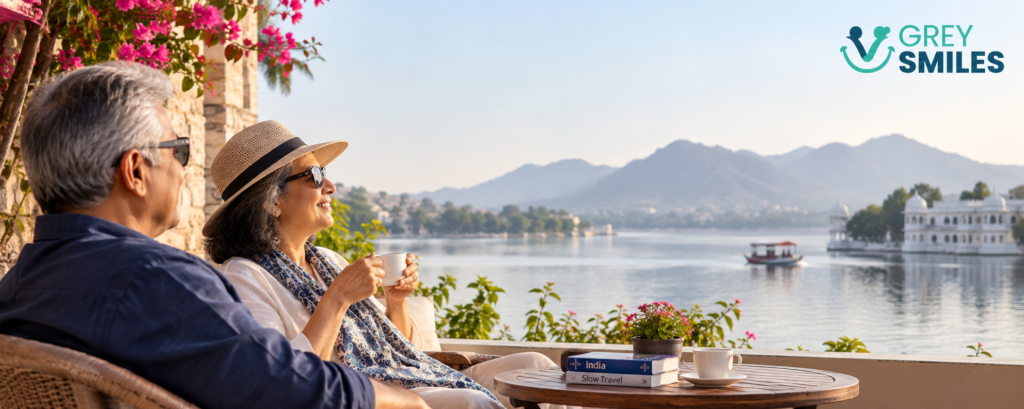
But senior travel in India is changing. The focus is increasingly moving away from rushed sightseeing and towards comfort, flexibility, accessibility, meaningful experiences and travel that fits the individual.
Some retirees want adventure. Others want quiet. Some prefer independent travel, while others value the reassurance of a small group. The common thread is simple: the journey should be designed around the traveller, not the other way around.
At a Glance
- Slow travel can make holidays less tiring and more immersive.
- Wellness, spirituality, culture, food and hobbies can turn travel into a more meaningful experience.
- Soft adventure can include nature walks, boating, wildlife and easy activities without unnecessary physical strain.
- Small-group travel can provide companionship while retaining some independence.
- Technology-assisted travel can simplify booking, navigation, communication and payments.
- Accessible travel requires checking accommodation, transfers, bathrooms, walking distances and mobility arrangements before booking.
- Longer stays and short breaks can both work well, depending on energy, budget and interests.
- Health and emergency planning should be part of the trip from the beginning.
- The best senior travel experience is not necessarily the one that covers the most places. It is the one that leaves you with enough energy to enjoy where you are.
GreySmiles Take
The biggest change in senior travel is not necessarily where older Indians are travelling. It is how they are choosing to travel. Retirement can mean fewer destinations, longer stays, more comfort and travel built around personal interests rather than someone else’s itinerary.
In This Guide
- Senior Travel Trends at a Glance
- Slow Travel
- Wellness & Spiritual Travel
- Soft Adventure Travel
- Cultural & Heritage Travel
- Solo & Small-Group Travel
- Cruise & River Cruise Travel
- Sustainable & Responsible Travel
- Technology-Assisted Travel
- Road Trips & Self-Drive Holidays
- Multi-Generational Family Travel
- Staycations & Short Breaks
- Travel for Learning & Hobbies
- Accessible & Assisted Travel
- Pet-Friendly Travel
- Culinary & Food Travel
- Luxury & Premium Travel
- Extended Stays & Seasonal Living
- Health & Safety
- Medical Emergency Planning
- How to Choose the Right Travel Style
- Senior Travel Planning Checklist
- Frequently Asked Questions
The Senior Travel Trends at a Glance
| Travel Trend | What It Means for Senior Travellers |
|---|---|
| Slow travel | Fewer destinations, longer stays and less rushing. |
| Soft adventure | Nature, wildlife and active experiences without unnecessary physical strain. |
| Wellness travel | Travel centred around relaxation, wellbeing and personal renewal. |
| Small-group travel | Companionship and logistical support without giving up all independence. |
| Technology-assisted travel | Easier booking, navigation, communication and digital payments. |
| Accessible travel | Greater attention to accommodation, transfers, mobility and practical comfort. |
| Interest-led travel | Food, photography, nature, culture, hobbies and learning become reasons to travel. |
| Longer stays | More time to settle into a destination rather than constantly changing hotels. |
If you are looking for destinations rather than travel trends, see our guide to the best domestic and international destinations for Indian retirees.
1. Slow Travel: Leisurely Holidays Over Rushed Itineraries
One of the simplest ways to make travel more comfortable after retirement is to slow it down.
Instead of attempting several cities in a few days, consider spending longer in one or two places. A week in Munnar, a longer stay in a hill town or several weeks in a coastal destination can allow you to settle into a routine rather than constantly packing and unpacking.
Slow travel also creates space for the small experiences that often become the most memorable: a morning walk, a local market, a familiar café, a conversation with residents or simply an afternoon spent reading.
It can also reduce the physical demands of frequent transfers, airport journeys, check-ins and early-morning departures.
If you are thinking about how travel can fit into a fulfilling retirement, our guide to embracing post-retirement bliss through travel explores the idea in greater detail.
2. Wellness & Spiritual Travel
Travel can be an opportunity to slow down mentally as well as physically. Some older travellers are drawn to Ayurveda and wellness programmes in Kerala or yoga and meditation in Rishikesh. Others prefer pilgrimage and spiritual journeys to places such as Varanasi, Rameswaram, Tirupati, Shirdi or destinations that hold personal meaning.
The important distinction is between a holiday that simply fills the calendar and one that genuinely leaves you feeling restored.
When considering a wellness programme, look carefully at the accommodation, programme intensity, food, accessibility and what medical support is actually available rather than assuming that every retreat is suitable for older travellers.
A spiritual journey should also be planned around practical realities such as walking distances, steps, weather, crowd levels and access to transport.
3. Soft Adventure Travel: A Little Adventure Without the Extreme
Adventure does not have to disappear after retirement. It may simply need to be adapted.
Gentle nature walks, easy trails, boating, wildlife safaris, birdwatching and carefully planned cycling experiences can provide excitement without turning the holiday into an endurance test.
The right choice depends on mobility, fitness, altitude, weather and individual health considerations.
A useful rule is to choose activities where the experience is challenging enough to be enjoyable but not so demanding that recovery takes up the rest of the holiday.
For older travellers, the quality of the activity matters as much as its difficulty. A short guided nature walk with comfortable transport may be more enjoyable than an ambitious itinerary that requires several hours of walking every day.
4. Cultural & Heritage Experiences
India offers an extraordinary range of forts, palaces, temples, museums, heritage towns, music traditions, crafts and regional festivals.
For retirees, travel can become even more rewarding when there is time to understand the history behind a place rather than simply photographing the next monument.
Consider guided heritage walks, local museums, classical music or dance performances, handicraft experiences, textile tours and food-and-culture trails.
A good local guide can also help reduce unnecessary walking and make it easier to understand what you are seeing.
Heritage travel can work particularly well with slow travel because one destination can offer several days of experiences without requiring constant movement.
5. Solo & Small-Group Travel
Retirement does not mean every holiday has to be a family holiday.
Some older adults may prefer to travel alone, while others find that small groups offer the right balance between independence and companionship. This can be particularly meaningful for single retirees or people whose partners are no longer able to travel.
The key is choosing a group whose pace and expectations suit you.
Before booking, look for clarity around:
- group size;
- walking requirements;
- accommodation;
- transfers;
- free time;
- meal arrangements;
- emergency support; and
- what is actually included in the package.
Companionship can make travel easier, but the itinerary should still leave room for personal choice.
6. Cruise & River Cruise Travel
Cruises can appeal to travellers who want to explore without repeatedly changing hotels. Accommodation, meals and some sightseeing are often organised within one trip, while river cruises can provide a slower way of experiencing a region.
Before booking, however, check how much walking is involved during excursions, how easy it is to board and disembark, what medical facilities are available and whether the ship or vessel can accommodate any mobility requirements.
Do not judge a cruise only by the ship. The shore excursions and transfers can determine how physically demanding the overall trip becomes.
7. Sustainable & Responsible Travel
Responsible travel does not have to involve complicated choices.
Supporting local guides and artisans, respecting local customs, avoiding unnecessary waste and choosing accommodation that takes its environmental impact seriously are practical ways to travel more thoughtfully.
For retirees who enjoy meaningful engagement, travel can also include volunteering, cultural exchanges or learning directly from local communities.
The aim is not simply to visit a place but to experience it with respect.
8. Technology-Assisted Travel
Smartphones have made many aspects of travel considerably easier. Indian seniors can use digital tools to book transport and accommodation, check train information, navigate unfamiliar areas, communicate with family and make digital payments.
Technology should make travel simpler rather than becoming another source of stress.
Before leaving, make sure important tickets, hotel details, emergency contacts and medical information are available offline as well.
Keep essential information in printed form too, particularly when travelling through places where connectivity may be unreliable.
For train travel, bookings and information can be accessed through IRCTC. Always check current rules and assistance options directly before travelling.
9. Road Trips & Self-Drive Holidays
A road trip can offer something that fixed tours sometimes cannot: flexibility.
You can decide when to stop, how long to spend somewhere and when you have had enough for the day. For retirees, this can make short breaks and regional journeys particularly enjoyable.
However, self-drive travel should be planned around the driver’s comfort and fatigue.
Long driving days, unfamiliar roads, night driving and difficult terrain can quickly turn a relaxed holiday into a tiring one.
Consider splitting longer journeys into manageable sections and using a driver when that makes the trip safer or more comfortable.
10. Multi-Generational Family Travel
Travelling with children and grandchildren can create some of the most treasured retirement memories. But a successful multi-generational holiday does not mean everyone has to do everything together.
Choose accommodation that gives different generations some private space and plan activities with different energy levels in mind.
Grandparents might enjoy a morning excursion while younger family members pursue something more active.
A little independence within a family holiday can make the entire trip more enjoyable.
11. Staycations & Short Breaks
Not every holiday needs a flight or a long road journey.
A nearby resort, heritage hotel, homestay or comfortable city break can provide the change of environment many people are looking for without the physical demands of long-distance travel.
Short breaks can also be useful when energy, mobility or health makes extended travel less attractive.
A two- or three-night trip that feels restorative may be far more enjoyable than a fortnight-long itinerary that leaves you exhausted.
For some retirees, several well-planned short breaks may also fit the annual travel budget better than one large holiday.
12. Travel for Learning & Hobbies
Retirement creates an opportunity to travel around interests that may have been postponed during working years.
Photography, birdwatching, history, architecture, cooking, classical music, textiles and regional languages can all become reasons to travel.
This kind of travel has an advantage: the destination becomes part of an experience rather than the entire purpose of the trip.
A cooking class, photography walk or local history tour can make even a familiar destination feel new.
13. Accessible & Assisted Travel
For older adults with mobility limitations, the question is not simply whether a destination is attractive. It is whether the journey and accommodation are practical.
Before booking, ask specifically about:
- lifts and ramps;
- bathroom design;
- room location;
- steps;
- transfer arrangements;
- distance between accommodation and activities;
- wheelchair access; and
- how much walking the itinerary actually involves.
If you need wheelchair assistance, a caregiver or other support, arrange it before departure rather than assuming it will be available at the last minute.
Also ask exactly what the operator means by “senior-friendly” or “accessible”. These terms can mean very different things.
14. Pet-Friendly Travel
For many retirees, pets are part of the family, and leaving them behind can make a holiday difficult.
Pet-friendly hotels, homestays and resorts can therefore open up additional possibilities, particularly for shorter road trips.
Always confirm the property’s current pet policy before booking, including restrictions on room types, common areas, food, deposits and local activities.
The destination should also be comfortable for the pet, not simply convenient for the owner.
15. Culinary & Food Trail Travel
Food can be one of the richest ways to experience India.
Lucknow’s cuisine, Kolkata’s food culture, Amritsar’s culinary traditions, Hyderabad’s flavours and the food of India’s coastal regions all offer reasons to travel in themselves.
Older travellers can explore local markets, cooking demonstrations, regional restaurants and food trails while adapting the experience to their dietary needs.
If trying street food, be sensible about hygiene, water and food handling, particularly when travelling away from home.
Food-led travel can also be combined with cultural travel, allowing retirees to explore local history and traditions through cuisine.
16. Luxury & Premium Travel
For some retirees, retirement travel is less about travelling cheaply and more about spending wisely on comfort.
A good hotel, private transfer, comfortable train journey or well-organised tour can remove much of the physical and logistical strain of travel.
Luxury does not necessarily mean extravagance.
Sometimes it simply means fewer transfers, better sleep, reliable transport, easier access and enough time to enjoy the destination.
GreySmiles Thumb Rule
Choose the pace before you choose the place. If an itinerary looks exhausting on paper, it will probably feel exhausting on the ground. Fewer transfers, longer stays and enough time to rest can make a bigger difference than adding another destination to the list.
17. Extended Stays & Seasonal Living
Retirement can make it possible to spend several weeks or even months away from home.
Rather than treating the trip as a conventional holiday, some retirees may prefer to rent a comfortable apartment or long-stay accommodation and establish a temporary routine.
This approach can work particularly well when the destination has reliable healthcare, grocery shops, pharmacies and easy local transport.
Over time, a place can begin to feel less like a tourist destination and more like a second home.
Longer stays can also reduce the repeated packing, unpacking and transfers that come with a multi-destination itinerary.
18. Health & Safety Awareness
Good travel planning for older adults should include health considerations from the beginning rather than adding them as an afterthought.
Think about the destination’s:
- climate;
- altitude;
- walking requirements;
- access to healthcare;
- medication availability;
- travel duration; and
- accessibility of accommodation and transport.
Carry sufficient regular medication, keep prescriptions and relevant medical information accessible, and check your travel insurance carefully.
If travelling internationally, understand what your policy actually covers, particularly regarding pre-existing conditions, emergency treatment and evacuation.
For insurance-related information and consumer resources, refer directly to the Insurance Regulatory and Development Authority of India (IRDAI).
19. Planning for Medical Emergencies During Travel
A medical emergency is unlikely to be part of anyone’s holiday plan, but preparing for one can make a stressful situation much easier to manage.
Before a longer or more remote trip, identify how you would reach medical care and make sure someone travelling with you knows about your essential medications and relevant medical history.
Keep a concise medical summary with important conditions, allergies, current medicines, dosages and emergency contacts.
Carry medicines in their original packaging and take enough for the journey with some additional supply in case of delays.
Digital copies of prescriptions, medical reports and insurance documents can also be useful, but keep important information available offline as well.
For international travel, make a note of your insurer’s emergency assistance number and understand the process for obtaining medical help or authorisation.
A Simple Senior Travel Rule
Don’t plan only for the holiday you hope to have. Plan for the small things that could make the holiday harder: fatigue, delayed transport, a missed connection, a change in weather, difficulty finding medication or needing medical attention.
How to Make These Travel Trends Work for You
You do not need to choose just one travel style.
A single retirement journey might combine several ideas: a slow stay in a heritage town, a few days of local food experiences, a gentle nature excursion and enough unplanned time to rest.
The best approach is to start with yourself rather than the destination.
Think about:
- your mobility;
- your energy levels;
- health considerations;
- budget;
- interests;
- preferred level of independence;
- comfort with technology; and
- how much physical activity you genuinely enjoy.
Then build the trip around those realities.
If you are planning travel as part of a broader retirement lifestyle, it is also worth considering how travel fits into your overall financial plan. GreySmiles’ guide to the Indian wealth journey from your 30s to your 60s provides a useful starting point for thinking about financial preparedness across different stages of life.
Senior Travel Planning Checklist
Before booking a significant trip, run through this checklist.
- ☐ Is the pace of the itinerary comfortable for me?
- ☐ How much walking is involved each day?
- ☐ Are there stairs or difficult transfers?
- ☐ Is the accommodation genuinely suitable for my mobility needs?
- ☐ Is healthcare reasonably accessible at the destination?
- ☐ Can I obtain my regular medicines if the trip is extended?
- ☐ Do I have adequate travel insurance for the trip?
- ☐ Have I saved emergency contacts and important documents offline?
- ☐ Does someone at home know my itinerary?
- ☐ Have I planned enough rest between major activities?
- ☐ Have I checked the cancellation and refund terms?
- ☐ Is the total trip cost comfortable within my retirement budget?
GreySmiles Takeaway
The best retirement holiday is not necessarily the most expensive, the most adventurous or the one that covers the most destinations. It is the one that fits the traveller.
Your time, energy, health, interests and comfort matter just as much as the destination itself.
How Travel Fits Into Retirement Planning
Travel is often one of the lifestyle goals people imagine when they think about retirement. But it needs to fit within the financial reality of retirement.
Travel spending can vary dramatically from year to year. You may spend more during the first few years after retirement and less later. You may also prefer frequent short trips rather than one large annual holiday.
When planning your retirement finances, therefore, think about travel as a lifestyle expense with flexibility rather than assuming one fixed annual number.
This can make your retirement plan more realistic. Your essential expenses need strong protection, while discretionary spending such as travel can be adjusted when markets, health or other circumstances change.
If you are still assessing your overall retirement preparedness, the GreySmiles Retirement Readiness Test can help you think through the broader picture.
Related GreySmiles Reading
- Best Domestic and International Destinations for Indian Retirees
- Embracing Post-Retirement Bliss: How to Make the Most of Your Vacation
- The Indian Wealth Journey: Retirement Planning from Your 30s to 60s
- GreySmiles Retirement Readiness Test
Frequently Asked Questions
What are the latest travel trends for senior citizens in India?
Senior travel is increasingly moving towards slower itineraries, wellness and spiritual experiences, soft adventure, small-group travel, technology-assisted trips, accessible travel, interest-led journeys, short breaks and longer stays.
What is the best type of travel for senior citizens in India?
There is no single best option. Slow travel, wellness holidays, cultural trips, short breaks, road trips, cruises and small-group journeys can all work well depending on mobility, health, budget and personal interests.
Is slow travel better for older adults?
Slow travel can be more comfortable because it reduces the number of transfers and allows more time for rest and adjustment. But it is not automatically better for everyone. The right pace is the one that allows you to enjoy the trip without feeling physically or mentally rushed.
Can senior citizens travel independently?
Many can, provided the trip is planned around their individual circumstances. Independence does not mean refusing all assistance. Pre-booked airport or railway assistance, accessible accommodation, reliable transfers and good emergency planning can make independent travel considerably easier.
What should senior citizens consider before booking a destination?
Look beyond the attractions. Consider the climate, altitude, walking requirements, transport, accommodation accessibility, healthcare availability, medication access, travel time and how easy it would be to manage an unexpected change in plans.
Is group travel suitable for senior citizens?
Small-group travel can provide companionship and logistical support while still allowing some independence. Check the group size, walking requirements, accommodation, transfers, free time and emergency arrangements before booking.
What should older travellers look for in accessible accommodation?
Ask specifically about lifts, ramps, bathroom access, steps, room location, transfer arrangements and walking distances. Do not rely only on descriptions such as “senior-friendly” or “accessible”; ask the property or operator exactly what facilities are available.
Should senior travellers buy travel insurance?
Travel insurance can provide useful protection, particularly for international travel or expensive trips. Read the policy carefully rather than assuming all medical expenses are covered. Pay particular attention to pre-existing conditions, exclusions, emergency medical treatment, evacuation, cancellation and assistance services.
How can technology help senior citizens travel?
Smartphones can help with booking, navigation, train information, communication, digital payments and access to travel documents. However, important information should also be available offline, and essential documents and emergency contacts should preferably have a printed backup.
Is luxury travel worthwhile for senior citizens?
It can be, particularly when paying for better accommodation, private transfers or fewer connections reduces physical and logistical strain. Luxury does not necessarily mean extravagance; sometimes it simply means greater comfort and convenience.
Final Thought: Travel at Your Own Pace
Retirement travel does not have to look like the holidays you took at 30 or 40. You may now have more freedom to decide where you want to go, how long you want to stay and what you want to get from the experience.
Perhaps the biggest opportunity is to stop measuring a successful holiday by how many destinations you manage to cover.
A successful retirement trip may instead be one where you sleep well, eat something memorable, meet interesting people, discover something new and return home with enough energy to start planning the next one.
Travel is not a race. Retirement gives you permission to slow down and enjoy it.
If you are looking for more ideas on making travel part of a fulfilling retirement, explore Embracing Post-Retirement Bliss: How to Make the Most of Your Vacation.
This article is intended for general educational and informational purposes. Travel conditions, accessibility, transport services, insurance coverage and healthcare availability can change. Older travellers should assess their individual circumstances and verify current information with relevant providers before making travel or healthcare decisions.



Start the conversation
Share a helpful experience, ask a thoughtful question, or add another perspective for fellow readers.