
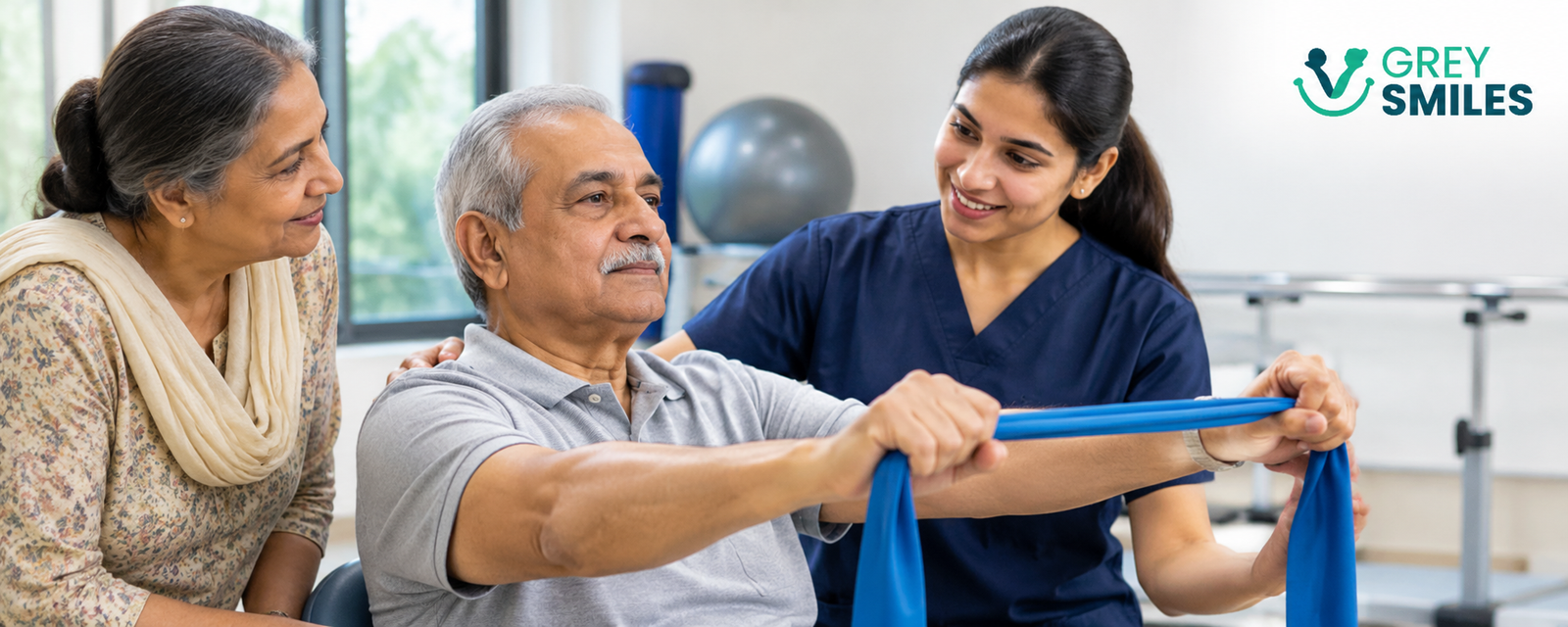
Stroke rehabilitation helps rebuild mobility, strength, confidence and independence, with professional guidance and family support.
About the Author: Alka Chhimpa, is a registered Physiotherapist with over five years of clinical experience in neurological rehabilitation, geriatric physiotherapy and musculoskeletal care. She currently manages physiotherapy services at a multispeciality hospital, with clinical experience in stroke, Parkinson’s disease, dementia, mobility and balance disorders, and has also contributed to senior rehabilitation services through the Chandigarh Senior Citizen Association.
A stroke can change a person’s life in a matter of minutes. For families, the days and weeks that follow can bring uncertainty, emotional stress and many questions. Will their loved one walk again? Will they be able to speak normally? How long will recovery take?
While every stroke is different, one thing remains important: rehabilitation is not just about regaining movement. It is about helping a person regain independence, confidence and the best possible quality of life.
Understanding what rehabilitation involves can help families become more confident partners in their loved one’s recovery.
At a Glance
- Stroke rehabilitation generally begins in hospital once the person is medically stable enough.
- Recovery may involve physiotherapy, occupational therapy and speech and language therapy.
- Progress varies from person to person, and there is no fixed recovery timeline.
- Family involvement, patience and professional guidance are important throughout rehabilitation.
- Recovery often continues after hospital discharge, requiring adjustments at home and ongoing support.
- The goal is to help the person regain as much independence, confidence and quality of life as possible.
Understanding Recovery After a Stroke
A stroke occurs when the blood supply to part of the brain is interrupted, either because of a blockage or bleeding. Since different areas of the brain control different functions, the effects can vary considerably.
Some people experience weakness or paralysis on one side of the body, while others may have difficulties with speech, swallowing, balance, memory, coordination or everyday activities.
Recovery is equally individual. Some people make significant progress within weeks, while others require months or years of rehabilitation and ongoing support.
Families should understand that there is no fixed recovery timeline. Progress depends on several factors, including the severity and location of the stroke, the person’s overall health, complications and access to appropriate rehabilitation.
When Does Rehabilitation Begin?
Rehabilitation generally begins in hospital once the person’s medical condition allows it to be started safely.
The aim is to identify difficulties early, prevent avoidable complications and begin working towards meaningful recovery goals.
A rehabilitation programme is not limited to physiotherapy. It often involves a multidisciplinary team that may include:
- Physiotherapists: Help improve movement, muscle strength, balance, coordination and mobility.
- Occupational therapists: Help people relearn everyday activities such as dressing, bathing, eating and performing household tasks.
- Speech and language therapists: Support people experiencing difficulties with speech, communication and swallowing.
Each professional contributes to a different aspect of recovery, with the overall aim of helping the individual achieve the greatest possible independence.
What Does Physiotherapy Involve?
Physiotherapy plays an important role in stroke rehabilitation, particularly when movement, balance and physical independence have been affected.
Depending on the person’s abilities and rehabilitation goals, treatment may include:
- Gentle movement and exercises to maintain joint mobility.
- Exercises to improve muscle strength and control.
- Practising sitting balance and maintaining a stable posture.
- Learning to transfer safely from a bed to a chair.
- Standing and walking practice when appropriate.
- Balance and coordination exercises.
- Training to use walking aids or other mobility equipment.
Rehabilitation should be tailored to the individual’s condition and abilities. Activities that appear simple, such as sitting independently or moving from a bed to a chair, can represent significant achievements for someone recovering from a severe stroke.
The focus should always be on safe, meaningful and gradual progress rather than rushing towards a particular milestone.
The Importance of Family Involvement
Families are often the most consistent source of support throughout recovery. Their involvement can make a meaningful difference, particularly when rehabilitation continues beyond the hospital setting.
Supporting someone after a stroke, however, requires more than simply encouraging them to exercise.
Families can help by:
- Encouraging participation in activities recommended by the rehabilitation team.
- Providing emotional support and celebrating small improvements.
- Allowing the person sufficient time to complete tasks independently wherever possible.
- Following professional advice on positioning, transfers and mobility.
- Keeping the home environment safe and accessible.
- Maintaining communication with healthcare professionals about changes in the person’s condition.
It is equally important to remember that family members should receive appropriate guidance before attempting exercises, transfers or physical assistance independently.
A medical emergency can also place an unexpected financial strain on a household. Hospitalisation, treatment and the initial stages of recovery may involve expenses that families haven’t planned for or that are not fully covered. Our guide on Managing Medical Emergencies & Hospitalization Cashflows looks at how families can prepare for and manage these financial pressures.
What Challenges Should Families Be Prepared For?
Stroke recovery is not always a straightforward process. Physical improvements may be accompanied by other difficulties that families might not initially expect.
1. Muscle Stiffness and Weakness
Reduced movement can contribute to stiffness, restricted joint mobility and changes in muscle tone. Regular positioning and an individually prescribed movement programme can help manage these difficulties.
2. Fatigue
Post-stroke fatigue is common. A person may become tired even after completing relatively simple activities. Rest periods and a carefully planned rehabilitation routine are important.
3. Communication Difficulties
Some individuals may understand what is being said but struggle to find the right words or express themselves. Patience, simple sentences, gestures and communication aids may help.
4. Emotional and Psychological Changes
Frustration, anxiety, low mood and changes in behaviour can occur following a stroke. These difficulties should not automatically be mistaken for a lack of motivation. Professional assessment and appropriate support may be needed.
5. Reduced Independence
Activities that were once automatic, such as dressing, eating or walking to the bathroom, may suddenly require assistance. Rehabilitation aims to help individuals regain these abilities wherever possible while preserving their dignity.
These changes can also affect the level of care a family needs to arrange and the expenses it may have to bear. Health insurance can help with eligible medical expenses, but families should understand the limits of their policy and what may fall outside the coverage. Our guide Health Insurance After 60: How to Choose, Keep and Afford the Right Cover explores some of the important considerations when reviewing health insurance in later life.
What Happens After Hospital Discharge?
Leaving hospital does not necessarily mean rehabilitation is complete. Many individuals continue their recovery at home, in rehabilitation facilities or in care settings, depending on their needs.
Families should understand the importance of continuing the rehabilitation plan, attending follow-up appointments and communicating with the healthcare team.
The home environment may also need adjustments, such as grab rails, suitable seating, mobility aids or other equipment recommended following an assessment.
For some families, home-based recovery may also require a physiotherapist, nurse or trained caregiver, particularly when the individual needs assistance with mobility, personal care or medical supervision. These arrangements can add considerably to household expenses. Our guide to Home ICU & Elder-Care Nursing Costs in India explores the costs families may face when care at home becomes more intensive.
Rehabilitation should be reviewed as the person’s abilities and needs change. New goals may emerge even after the initial recovery period.
Setting Realistic Expectations
One of the most important things families can do is understand that recovery is individual.
Comparing one person’s progress with another’s can create unnecessary disappointment and pressure. A person who regains the ability to sit independently, communicate more effectively or perform a daily activity with less assistance has made meaningful progress.
Not every individual will regain all their previous abilities. Nevertheless, rehabilitation can continue to support function, comfort, participation and quality of life.
The goal is not always to return to exactly how life was before the stroke. Sometimes, it is about finding new ways to live as independently and comfortably as possible.
When recovery involves prolonged rehabilitation, recurring medical expenses or ongoing assistance, families may also need to reconsider how they fund care without putting their long-term savings at risk. Our article on Proactive Healthcare Financing: Protecting Your Retirement Savings explores the financial considerations that arise when healthcare needs extend into longer-term care.
A Final Word for Families
Behind every stroke recovery journey is a person adjusting to a new reality, and a family learning how to support them through it.
Patience, consistency, professional guidance and emotional support all have an important role to play.
Families should remember that they do not have to manage everything alone. Working alongside healthcare professionals and understanding the rehabilitation process can make the journey less overwhelming.
GreySmiles TakeStroke recovery is often a long journey, and families can find themselves adjusting to a pace of life they never anticipated. There may be encouraging days when progress is visible, followed by days when even small tasks seem difficult. It takes patience to accept this uncertainty and to recognise progress without placing undue pressure on the person recovering.
Rehabilitation is about much more than physical improvement. It is about helping someone rebuild confidence, participate in everyday life and retain as much independence as possible. The role of the family is to support this process without taking away the person’s opportunity to do things for themselves.
Recovery is not measured only by how far someone can walk or how much movement they regain. It is also measured by the independence they rebuild, the confidence they rediscover and the dignity they retain along the way.
Disclaimer: Stroke recovery and rehabilitation vary from person to person depending on the severity of the stroke, overall health and individual circumstances. The information in this article is intended for general awareness and educational purposes only and should not be considered medical advice, diagnosis or a substitute for professional medical care. Rehabilitation exercises, treatment and caregiving decisions should be undertaken in consultation with qualified healthcare professionals.




Start the conversation
Share a helpful experience, ask a thoughtful question, or add another perspective for fellow readers.